Can a Real Estate Agent Film Listings with Their Own Drone?
Last updated:
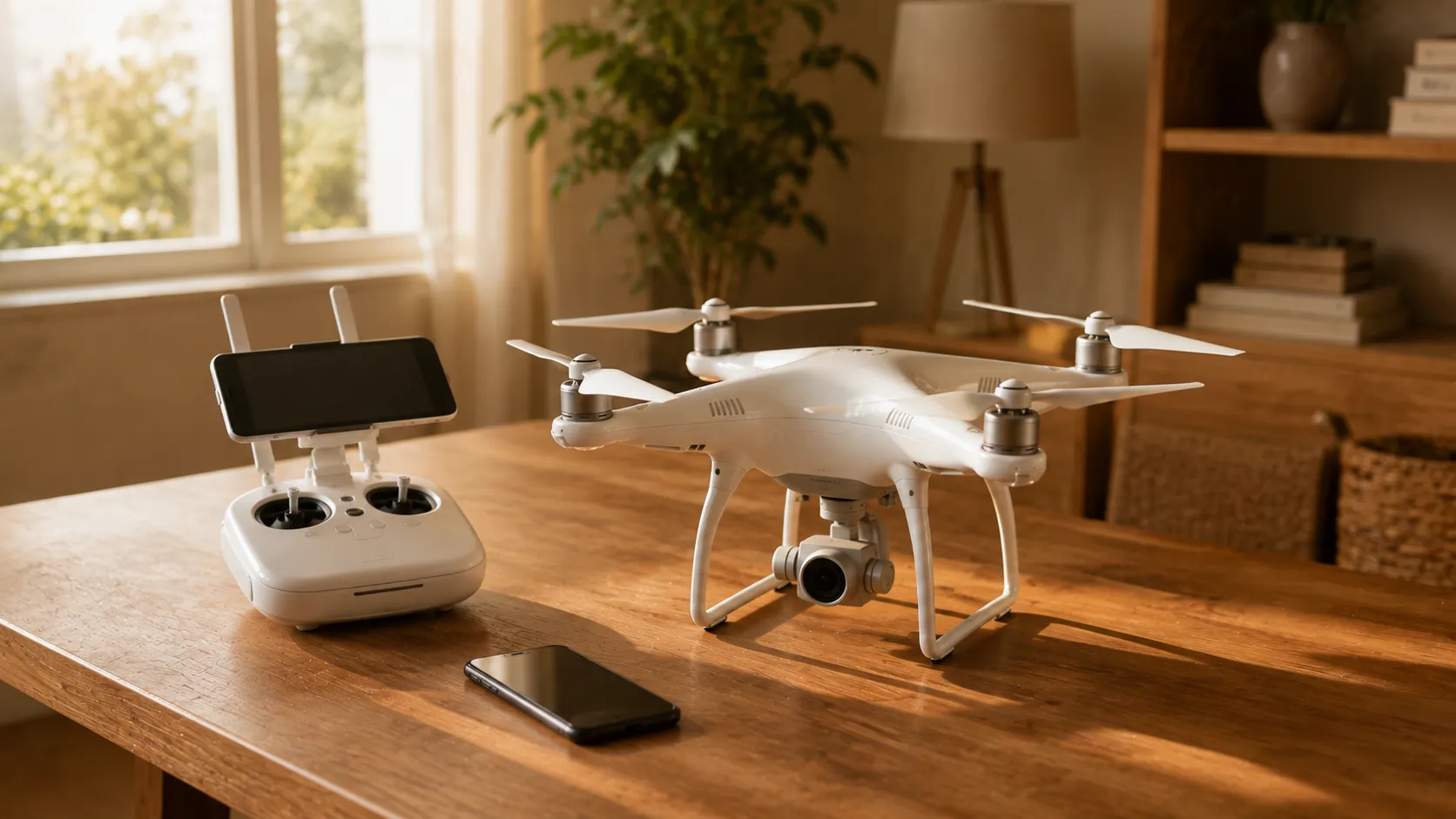
Yes, but not as a hobby flight. Under Türkiye's new drone instruction, SHT-İHA, in force since July 30, 2026, producing images to sell or rent a property is a commercial purpose and requires at least a P1 (commercial) pilot license. This holds even for your own listing, and even with a light drone.
One of the questions real estate agents ask most often is this: “I bought my own drone; can I take the aerial photos for my listing myself?” The new Unmanned Aircraft Systems Instruction (SHT-İHA; İnsansız Hava Aracı Sistemleri Talimatı, unofficial English name), issued by SHGM, Türkiye’s Directorate General of Civil Aviation, entered into force on July 30, 2026 and has made the answer clear. The short answer: you can, but you need to know that it is not a “hobby flight.”
Is filming a listing a commercial activity?
Producing images to offer a property for sale or rent is a commercial purpose. The Instruction places non-commercial visual line-of-sight flights under the P0 (amateur) license and commercial operations under at least the P1 (commercial) license (Art. 6/2).
That does not change when you are filming your own listing. What matters is not on whose behalf you film, but that the footage serves a commercial purpose.
P0 is enough
- Hobby flights
- Personal archive, no intent to share
- No link to commercial gain
P1 required
- Listing photos or video
- Promoting a rental or sale
- Promoting an office or agent
- Any image produced for a client
Does buying a small drone change anything?
Under the old rules, authorization depended largely on the aircraft’s weight; a light aircraft meant fewer obligations. The new Instruction has broken this link: operational authorization is granted according to the pilot’s license level and the status of the zone being flown in, regardless of the aircraft’s mass class (M0–M3) (Art. 8/4). Weight plays a role only in the technical requirements.
So filming a listing with a 900-gram drone is still a commercial operation and requires P1.
What about a toy drone?
The Instruction defines a separate category, “simple drone (toy),” and exempts it from license, registration, registry and import conformity obligations (Art. 4/b). But the conditions for the exemption are strict: by design, the aircraft must be unable to exceed a flight envelope of a 10-meter radius horizontally and 20 meters in height vertically, and its maximum takeoff mass and technical specifications must not exceed those set for the M0 class (Art. 4/b, Art. 8/2).
In practice, that envelope is not enough for an aerial view of a building or a plot of land. In other words, the toy exemption does not open the door to real estate filming.
Can a drone fly without registration?
This is the most concrete part of the new rules. Unless the user’s registration is verified through İHATTYS, SHGM’s drone registration and flight-permission portal, the geofencing function does not let the aircraft leave a default envelope of 10 meters horizontally and 20 meters vertically; once registration is verified, the envelope widens according to the license level (Art. 23/2).
On top of this, a remote identification system and software certification are mandatory for aircraft subject to the registration obligation (Art. 23/4, 23/7). Aircraft without certification cannot be operated in Turkish airspace.
This applies to aircraft that meet the Instruction’s requirements. For aircraft acquired before the Instruction entered into force, the deadline for adapting them to the registration, remote identification and geofencing requirements is July 31, 2027 (Art. 25/7, Art. 27).
In short, as adaptation is completed, the “I’ll just fly once without registering” option effectively disappears.
What if you already hold an old certificate?
Acquired rights are preserved, but adaptation is required: holders of the İHA0 certificate complete P0 adaptation training, İHA1 certificates are converted to P1, and İHA2 and İHA3 licenses to P2 (Art. 29/2). The deadline for both the license adaptation and the adaptation of existing aircraft to the registration, remote identification and geofencing requirements is July 31, 2027 (Art. 25/7, Art. 27).
Pay attention, too, to who provides your training. In an announcement on aviation licenses in general, published on September 29, 2026, SHGM stated that training given by instructors not approved on the KDM Platform, and exams held outside the KDM Exam System, will not be considered valid in licensing and adaptation procedures. The announcement does not name drones, but drone pilots’ training, exams and adaptation also run through KDM-ORG (Art. 4/t). If you plan to train with a provider, whether for a new P1 license or for adaptation, log in to the SHGM-KDM Platform through the e-Government Gateway (e-Devlet) before you enroll or pay, and check whether the provider is an authorized Training Resource Provider (Eğitim Kaynak Sağlayıcısı, EKS) there.
Frequently Asked Questions
Does drone filming for a listing count as a hobby?
No. Producing images to offer a property for sale or rent is a commercial purpose. Flights with no commercial purpose fall under P0; filming a listing does not fall under that scope and requires at least a P1 (commercial) license.
Do the rules change if I use a small, light drone?
No. Under the new rules, operational authorization depends on the pilot’s license level and the status of the zone being flown in, not on the aircraft’s mass class. Weight plays a role only in the technical requirements; if there is a commercial purpose, even a light aircraft requires P1.
Can I film with a toy drone?
Aircraft defined as simple drones are exempt from license, registration and registry obligations; however, the exemption covers aircraft that by design cannot exceed a 10-meter radius horizontally and 20 meters in height vertically and do not exceed the specifications set for the M0 class. In practice, this flight envelope is not enough for an aerial view of a property.
What happens if I fly without registering?
With an aircraft that meets the Instruction’s requirements, you technically can’t fly anyway: until your registration is verified, geofencing keeps it inside a very narrow default envelope. Legally, unregistered operation is subject to administrative sanctions under Law No. 2920 and the Regulation on Administrative Fines to Be Imposed by the Directorate General of Civil Aviation (SHY-İPC, unofficial English name).
If I hold an old certificate, do I need to do anything again?
Acquired rights are preserved, but adaptation is required. Holders of the İHA0 certificate complete P0 adaptation training, İHA1 certificates are converted to P1, and İHA2 and İHA3 licenses to P2. Both the license adaptation and the adaptation of existing aircraft to the new technical requirements must be completed by July 31, 2027.
This content is for general information only and is not legal advice. Please seek expert advice for your specific situation.
Should you fly it yourself or hire a professional?
Getting a license is possible, and for some offices it makes sense. But for a single listing, managing the license, registration, device compliance and permit process is not efficient for most agents. The Civil Aviation Occurrence Regulation (SHY-OLAY), which will enter into force on March 18, 2027, adds the reporting of safety occurrences to this picture; the obligation there is tied not to individuals but to the “service provider,” meaning the institutions, organizations and businesses under the Directorate General’s oversight. For the details of the rules, see our article on the new era of real estate drone filming; if you would rather leave the job to us, take a look at our drone aerial filming service. If you plan to fly yourself, also read our article on privacy and KVKK in drone filming, which covers the neighboring plots, people and plates that end up in the frame.
Sources (4)
- Sivil Havacılık Genel Müdürlüğü — İnsansız Hava Aracı Sistemleri Talimatı (SHT-İHA) (Directorate General of Civil Aviation — Unmanned Aircraft Systems Instruction; full text; in Turkish) — web.shgm.gov.tr
- Sivil Havacılık Genel Müdürlüğü — İnsansız Hava Aracı Sistemleri Talimatı (SHT-İHA) Yayımlanmıştır (Directorate General of Civil Aviation — the Unmanned Aircraft Systems Instruction has been published; announcement, July 30, 2026; in Turkish) — web.shgm.gov.tr
- Mevzuat Bilgi Sistemi — 2920 sayılı Türk Sivil Havacılık Kanunu (Legislation Information System — Turkish Civil Aviation Law No. 2920; in Turkish) — mevzuat.gov.tr
- Sivil Havacılık Genel Müdürlüğü — Havacılık Eğitimlerinde Yetkisiz İlanlara Karşı Önemli Duyuru (Directorate General of Civil Aviation — important announcement on unauthorized aviation training advertisements; announcement, September 29, 2026; in Turkish) — web.shgm.gov.tr
This content is reviewed regularly against current regulations. Last review: .