Privacy and KVKK in Real Estate Drone Photography
Last updated:
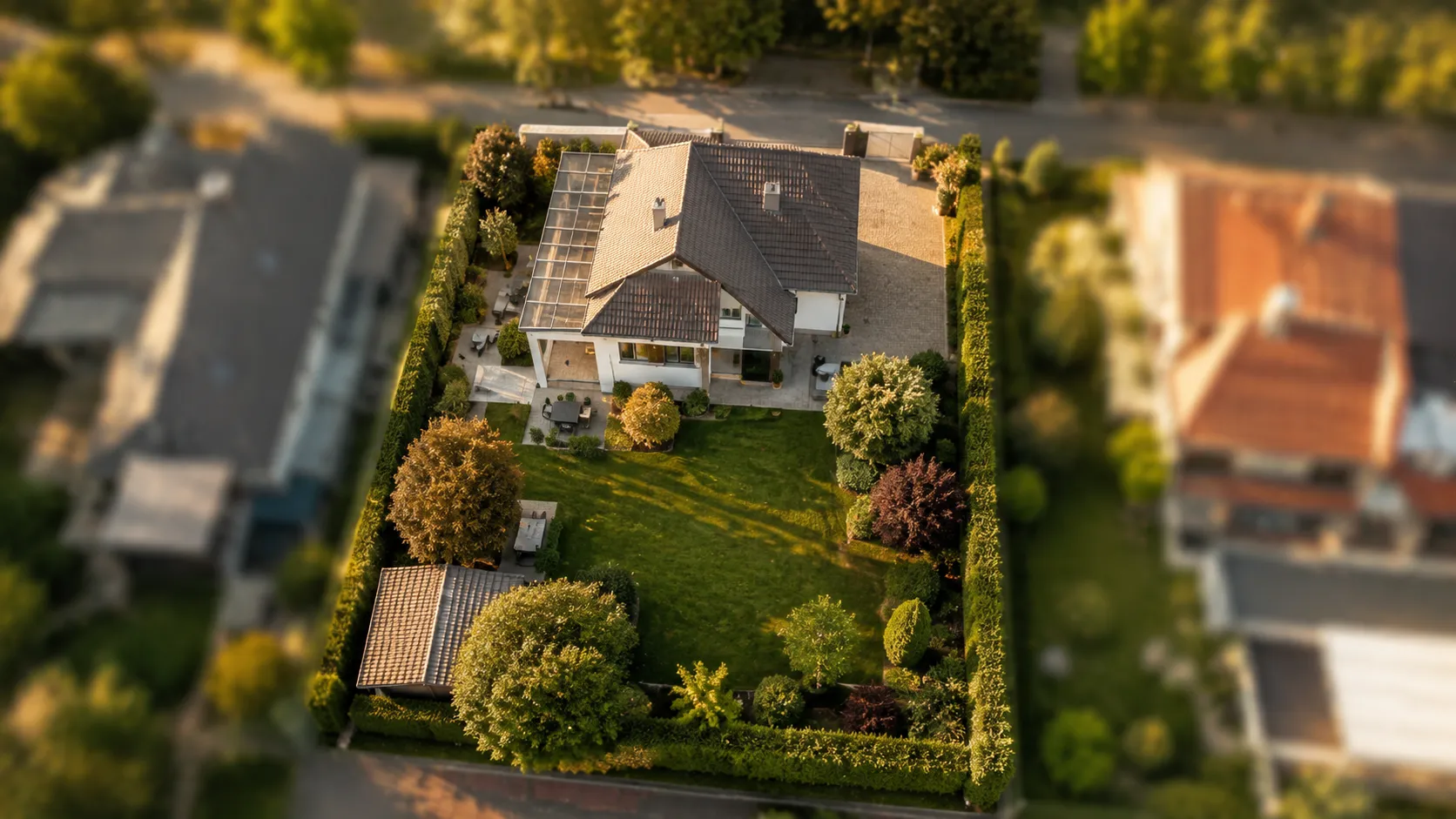
Created with the support of AI technologies.
In real estate drone shoots, the risk on site is usually not the license but what enters the frame: a neighbor's garden, a license plate, a person on a balcony. Türkiye's new drone instruction, SHT-İHA, lists privacy among the grounds for restricting airspace and cites KVKK, the personal data protection law, among its legal bases.
When people talk about aerial filming, they usually talk about licenses and permits. But on site, the real problem often comes from somewhere else: a neighbor’s garden in the frame, a license plate in the street, a person on a balcony. The new Unmanned Aircraft Systems Instruction (SHT-İHA; İnsansız Hava Aracı Sistemleri Talimatı, unofficial English name), issued by SHGM, Türkiye’s Directorate General of Civil Aviation, has addressed this issue deliberately, not by accident.
Is privacy now part of drone regulation?
When the Instruction defines the parts of airspace where drone operations are restricted or prohibited, it explicitly lists privacy among the grounds, alongside safety and security (Art. 4/p). In addition, Personal Data Protection Law No. 6698 (KVKK) is among the Instruction’s legal bases (Art. 3/1-ç).
In other words, privacy in aerial filming is not a matter of “being polite”; it is part of the regulation’s own framework.
Where is the risk in a real estate drone shoot?
An aerial view reveals what cannot be seen from the ground. When you film a building’s roof, the garden, pool and terrace of the plot next door end up in the frame too. That excess is exactly where the risk lies:
Keep in the frame
- The property being listed
- Building facade and roof
- Its own garden and parking
- The general surroundings
Keep out of the frame
- Neighbors' gardens, pools, terraces
- Recognizable people
- License plates
- Open windows and interior views
- Neighboring plots: the inside of a garden, a pool, a terrace, an open window. Any property that is not part of the listing is excess.
- Recognizable people: people on a balcony, in a garden or in the street.
- License plates: they count as personal data because they make a person identifiable (Law No. 6698, Art. 3/1-d: any information relating to an identified or identifiable natural person).
- Location data: EXIF/GPS information embedded in a photo can carry the property’s exact coordinates.
How do you manage the risk? Framing first, then cleanup
All of these risks can be managed at the time of shooting. Fixing them afterwards is always more expensive and always less complete:
- Keep the frame tight. Put the property being listed at the center and leave the surroundings out as much as possible. The higher you fly, the more neighbors enter the frame.
- Choose the angle. The same building can be filmed from different directions; there is usually an angle that does not look into the neighbor’s garden.
- Think about timing. Hours with fewer people and vehicles around make a clean frame easier.
- Clean up before publishing. Faces and plates left in the frame are blurred; EXIF and GPS data are deleted.
We have ready-made tools for both halves of the last step: Face and License Plate Blur automatically detects faces left in the frame and pixelates them in your browser, and lets you mark plates by hand to cover them; the Real Estate Photo Assistant removes EXIF and location data from photos. With both tools, your files are never sent to a server.
Is the property owner’s permission enough?
“The owner gave permission” is a sentence you hear often, but its scope is limited. The owner’s permission covers their own property; it counts for nothing when it comes to neighboring plots, passersby in the street or third parties’ vehicles.
That is why the right approach is not to settle for permission, but to apply framing discipline and image cleanup together.
Frequently Asked Questions
Is it a problem if a neighbor’s garden shows up in a drone shot?
Yes, it is risky. A listing image should show only the property being listed. If a neighboring plot’s garden interior, pool or windows appear in the frame, that raises both privacy and personal data issues. The solution is to keep the frame tight from the start and, if needed, blur the surroundings after the shoot.
Why is a license plate or a person’s face in the image a problem?
A plate and a face make a person identifiable, so they count as personal data and fall under Law No. 6698. Having them in a listing image creates unnecessary data processing; the most practical solution is to keep them out of the frame during the shoot and blur whatever remains before publishing.
Is privacy a matter for drone regulation, or only for KVKK?
Both. When the new drone Instruction (SHT-İHA) defines the parts of airspace where drone operations are restricted or prohibited, it explicitly lists privacy among the grounds; in addition, Personal Data Protection Law No. 6698 (KVKK) is one of the Instruction’s legal bases.
Is a photo’s location data a risk?
Yes. EXIF data embedded in photo files can carry the coordinates where the shot was taken; this can spread the property’s exact location without anyone intending it. Removing EXIF and GPS data before publishing is good practice, and our Real Estate Photo Assistant removes this data.
Is the property owner’s permission enough?
The owner’s permission is necessary for their own property, but it is not enough when it comes to neighboring plots, passersby in the street or third parties’ vehicles. That is why permission alone is not the solution; framing discipline and image cleanup should be applied together.
This content is for general information only and is not legal advice. Please seek expert advice for your specific situation.
A clean frame, a trouble-free listing
In aerial filming, privacy is handled while the shoot is being planned, not afterward. At IDIFO, we apply this framing discipline on real estate projects. You can look at our drone aerial filming service, or read our main article on the overall framework of the new rules.
Sources (3)
- Sivil Havacılık Genel Müdürlüğü — İnsansız Hava Aracı Sistemleri Talimatı (SHT-İHA) (Directorate General of Civil Aviation — Unmanned Aircraft Systems Instruction; full text; in Turkish) — web.shgm.gov.tr
- Mevzuat Bilgi Sistemi — 6698 sayılı Kişisel Verilerin Korunması Kanunu (Legislation Information System — Personal Data Protection Law No. 6698; Art. 3/1-d: definition of personal data; in Turkish) — mevzuat.gov.tr
- Kişisel Verileri Koruma Kurumu (Personal Data Protection Authority; board decisions and guides; in Turkish) — kvkk.gov.tr
This content is reviewed regularly against current regulations. Last review: .