Food Photography
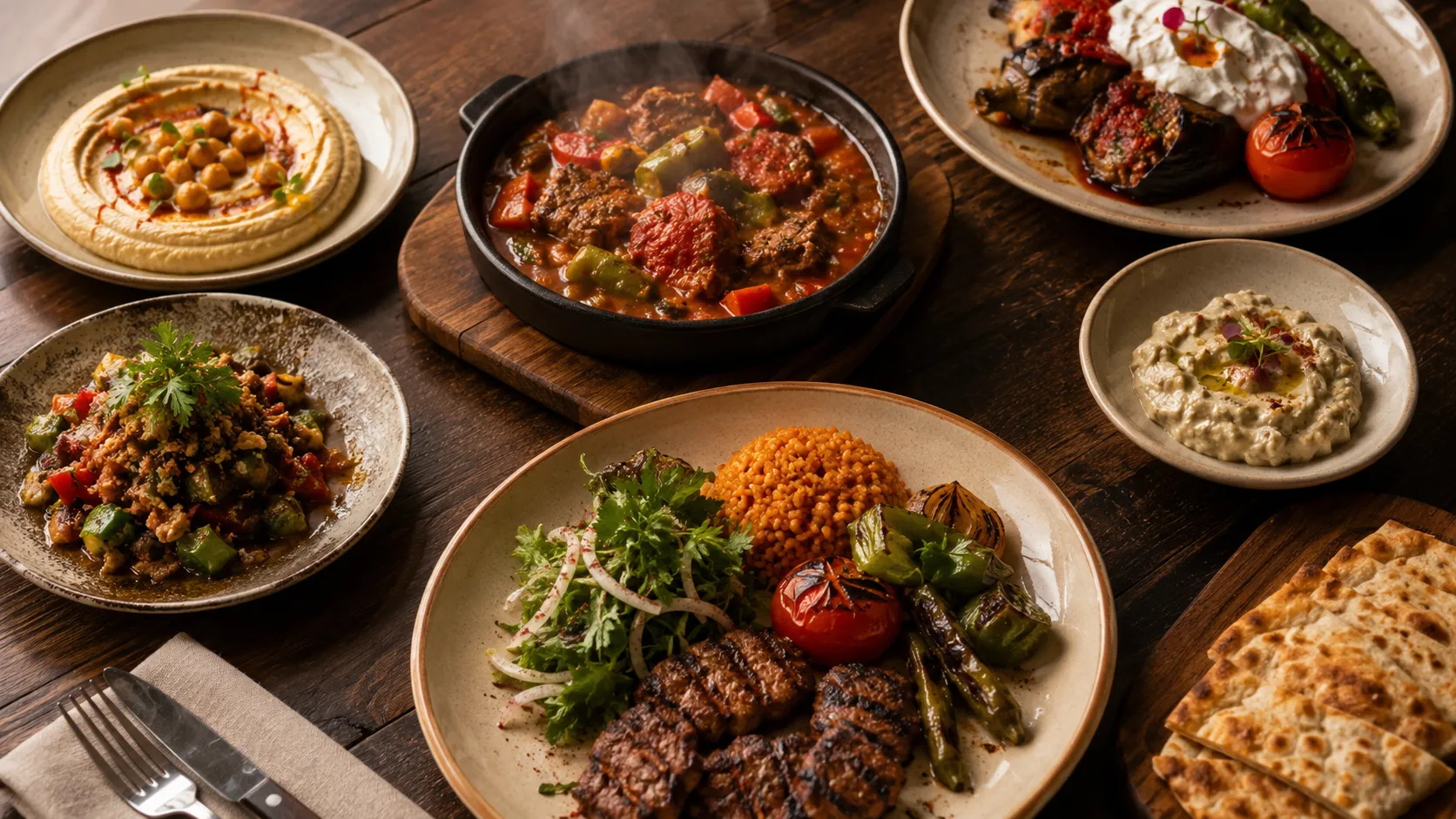
Food photography is hard because the subject doesn’t wait. Steam disappears in seconds, sauce runs, salad wilts, ice cream melts. The good frame is caught in the short window between preparation and the shot.
For food photography, our crew comes to your restaurant or café; the food is prepared by your own kitchen, just as it’s served, and shot the moment it leaves the kitchen. Packaged products are shot in the studio. Frames are delivered in menu, social media and ordering-platform formats; the dish itself is always a real shoot.
What do we shoot it for?
Menus and digital ordering
On Yemeksepeti, Getir (major Turkish food delivery apps) and similar platforms, customers look at the photo first. The difference between a good and a bad photo of the same dish shows up directly in the number of orders.
Social media
Weekly or monthly content sets for a steady feed. Vertical format for Stories and Reels, square format for the feed.
Packaged food products
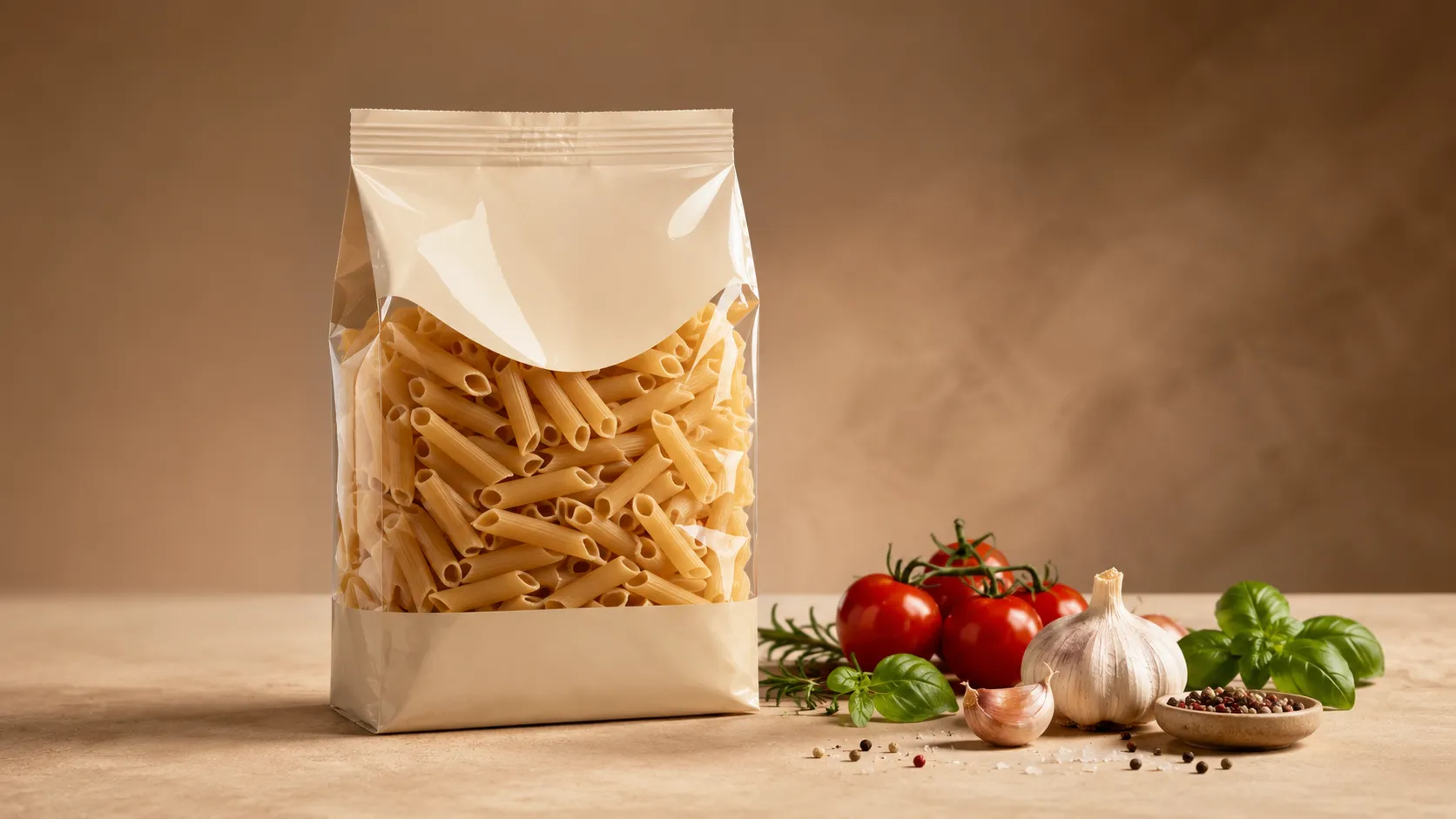
Shelf images, e-commerce product photos, marketplace content. This is where product photography discipline comes in: white background, rule compliance, a consistent series.
Menus and printed materials
Menu cards, posters, campaign visuals.
Where do we shoot?
On location
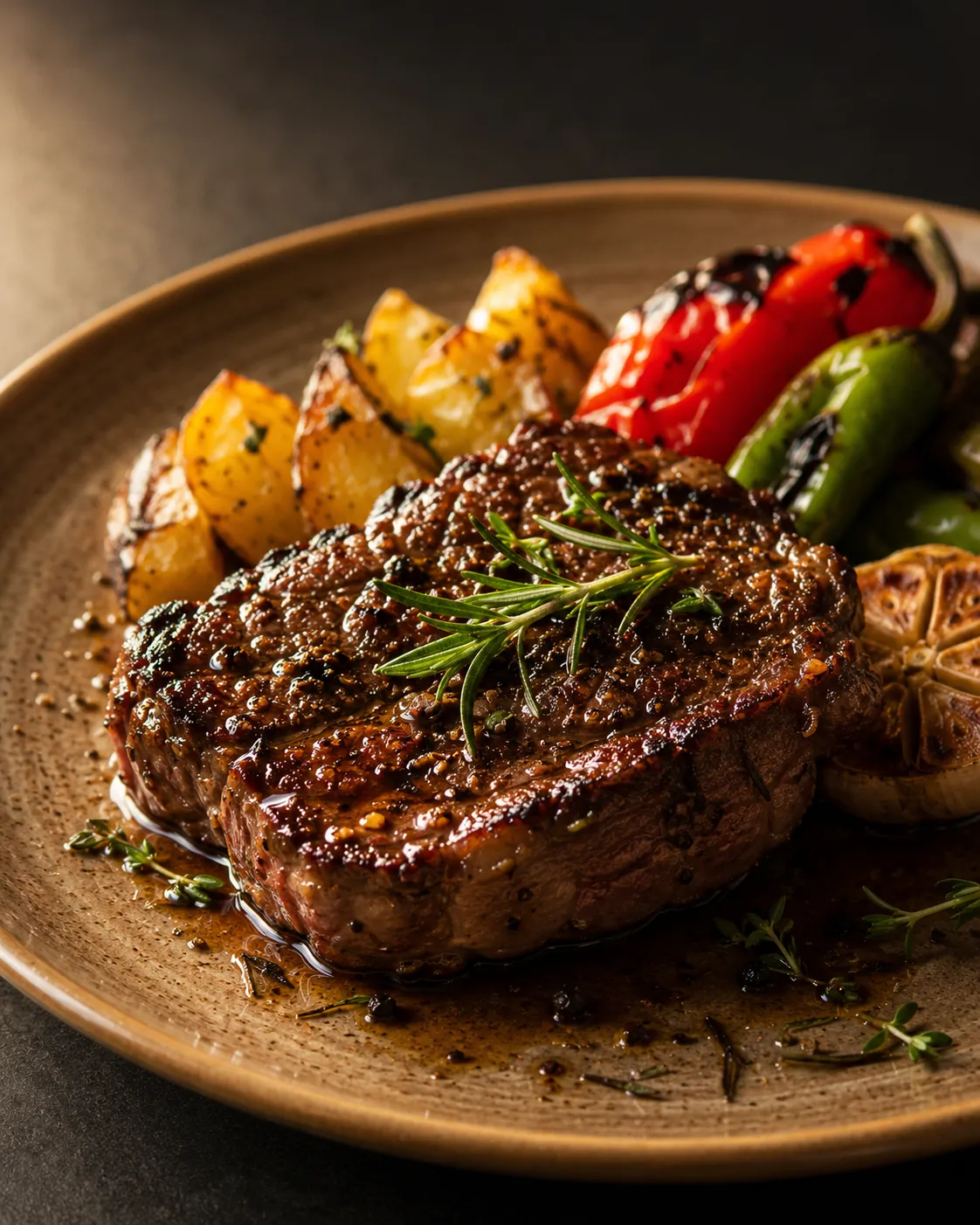
At restaurants and cafés, in the business’s own kitchen, just as the dish is served. The crew goes to the venue, and the shoot takes place outside service hours.
In the studio
For packaged products and brand shoots, when controlled lighting is needed.
Which one is right depends on the product: a dish served hot comes out better on location, a packaged product in the studio.
We work in Istanbul and the surrounding area; depending on the scale of the project, we also shoot in other cities.
From the menu to the delivered frame, in four steps.
Because food doesn’t wait, the secret isn’t in the moment of the shot but in the planning before it.
Which dishes will be shot, how many frames, for what use — menu, social media, packaging. The list is drawn up together before the shoot.
The shoot is scheduled outside service hours; the order in which dishes are prepared follows the kitchen’s pace.
The food is shot the moment it leaves the kitchen; steam, sauce and texture are caught at their freshest. The scene and angle list follows the plan.
Frames are culled and color-corrected, then delivered in menu, social media and ordering-platform formats.
How does a shoot day at a restaurant work?
At restaurants and cafés in Istanbul, we shoot in the business’s own space, with its own kitchen. The day is built around the kitchen’s pace; the number of plates and the light in the venue decide the total time.
Set-up
The crew arrives at the venue before service starts. The lighting is built around the venue’s own light: if the window light is enough, we rely on it; if not, we fill in with soft artificial light. The surface and set are chosen to match the menu — a wooden table, a marble counter or the business’s own serving surface. Light and framing are ready before the first plate leaves the kitchen.
Plate order and coordination with the kitchen
The shot list is put in order together with the restaurant’s chef and kitchen; the chef decides how each plate is presented. Plates that can wait — meze (small shared plates), salads, desserts served at room temperature — go in between; plates with steam, sauce or something melting come to the set the moment they leave the kitchen. While the kitchen prepares one plate, the set has already finished the previous one; no dish waits while the lights are being set up.
Without disrupting service
The shoot is scheduled outside service hours, usually when the dining room is at its quietest. The set goes in a corner of the dining room and doesn’t interrupt the flow of the kitchen or the staff; by the time service approaches, the area has been cleared.
Selection and delivery
We review the frames together during the shoot; any missing angle is shot before we leave the venue. After selection and color correction, the files are delivered sorted by the channel they will be used on.
From our restaurant and café shoots
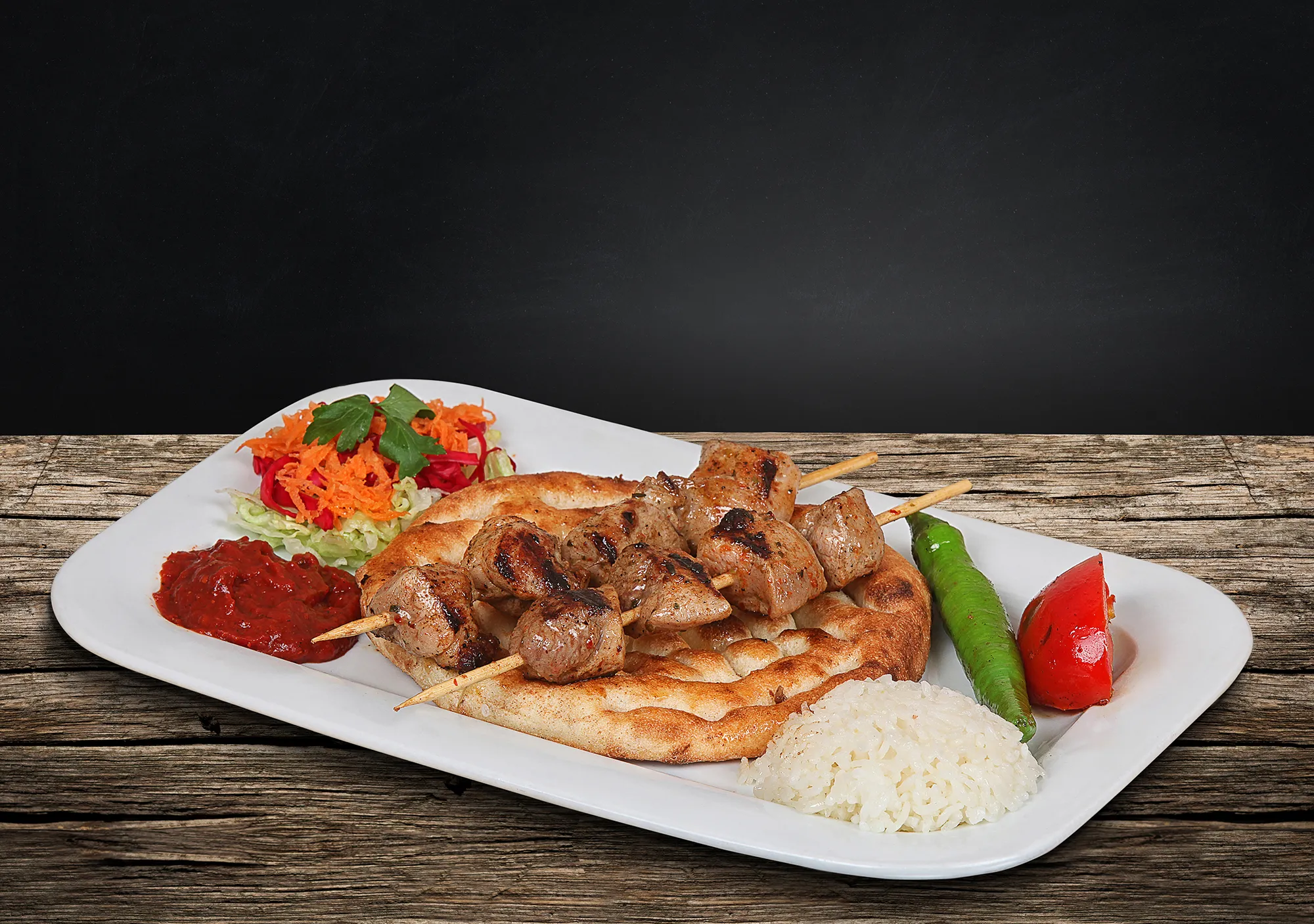
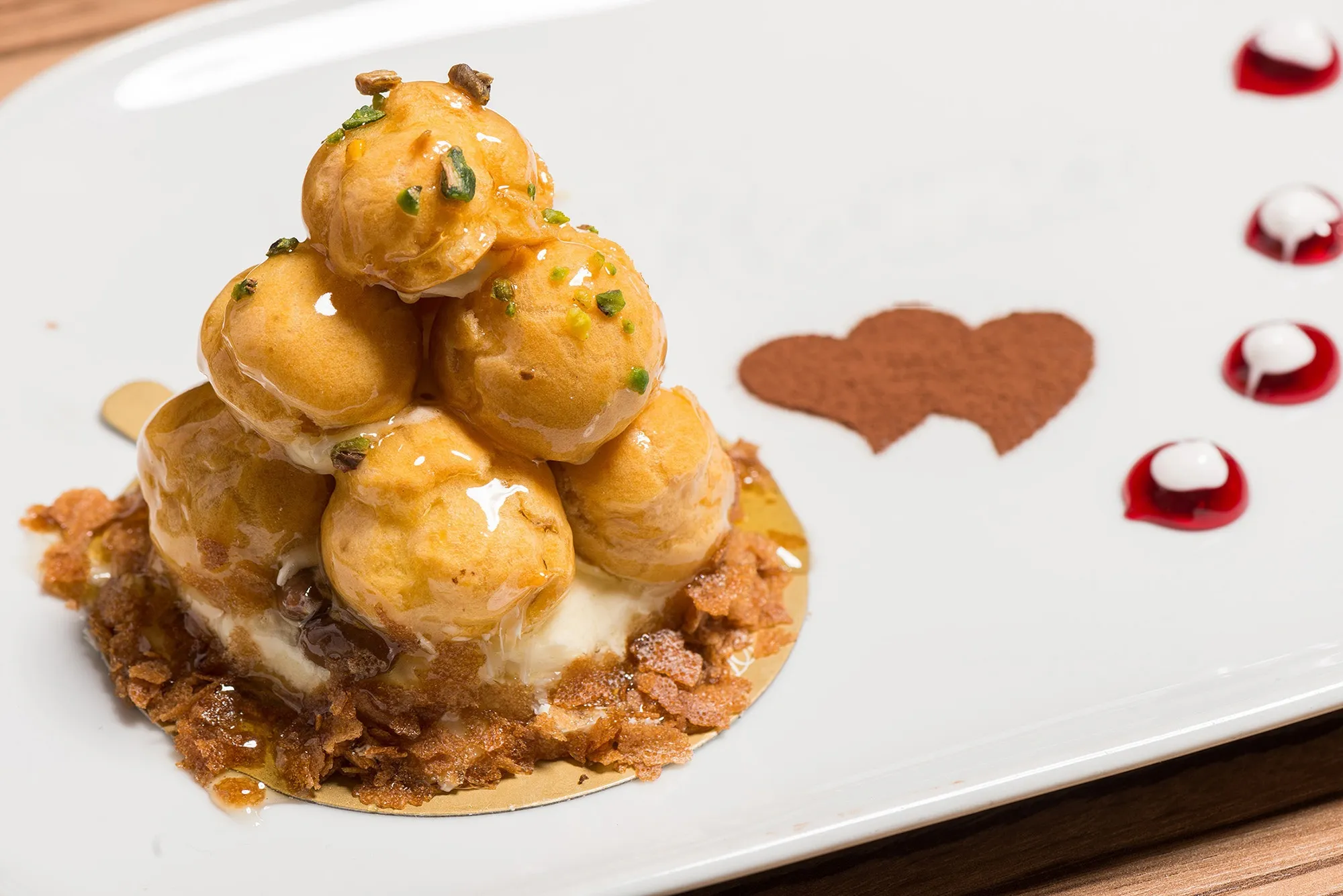
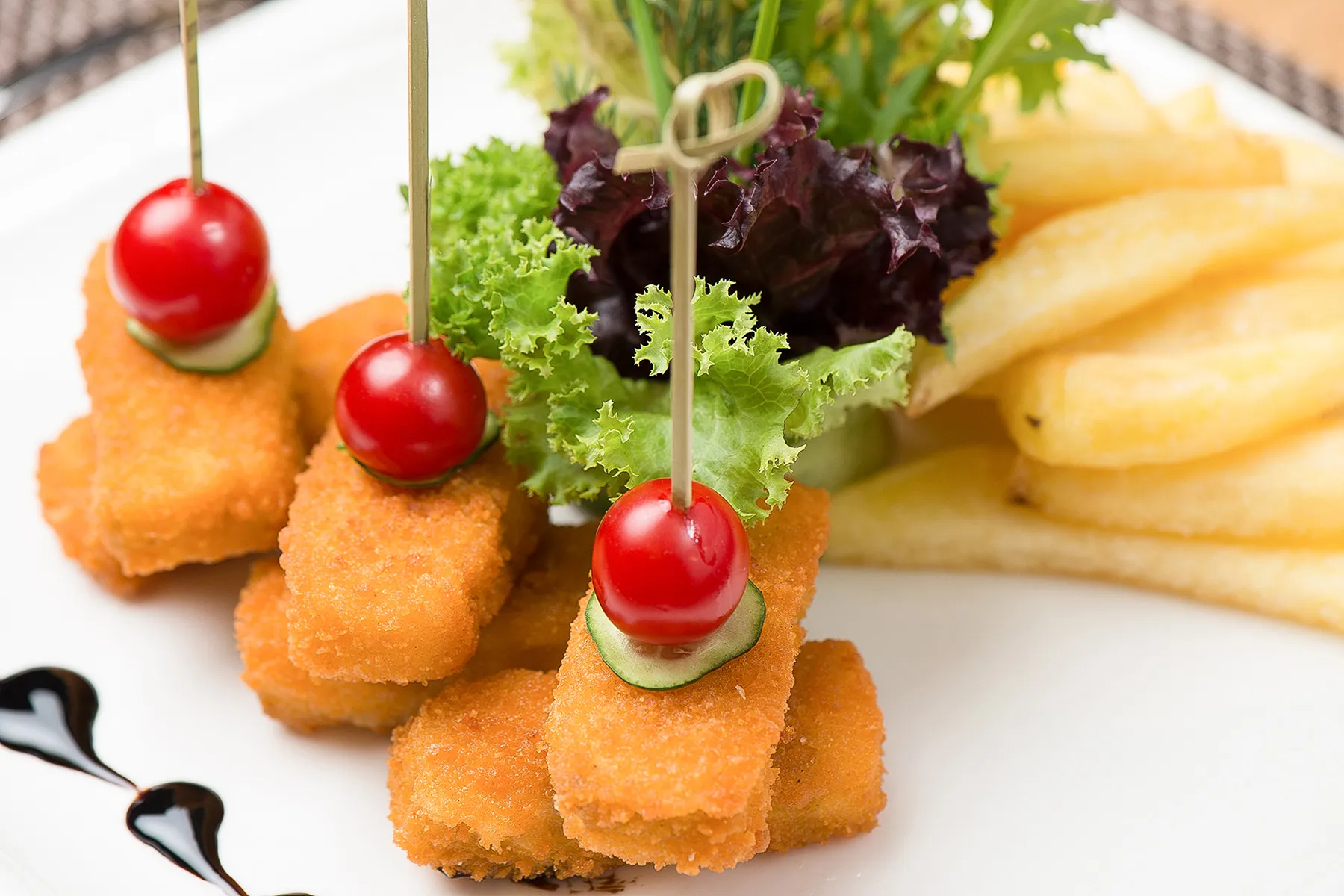
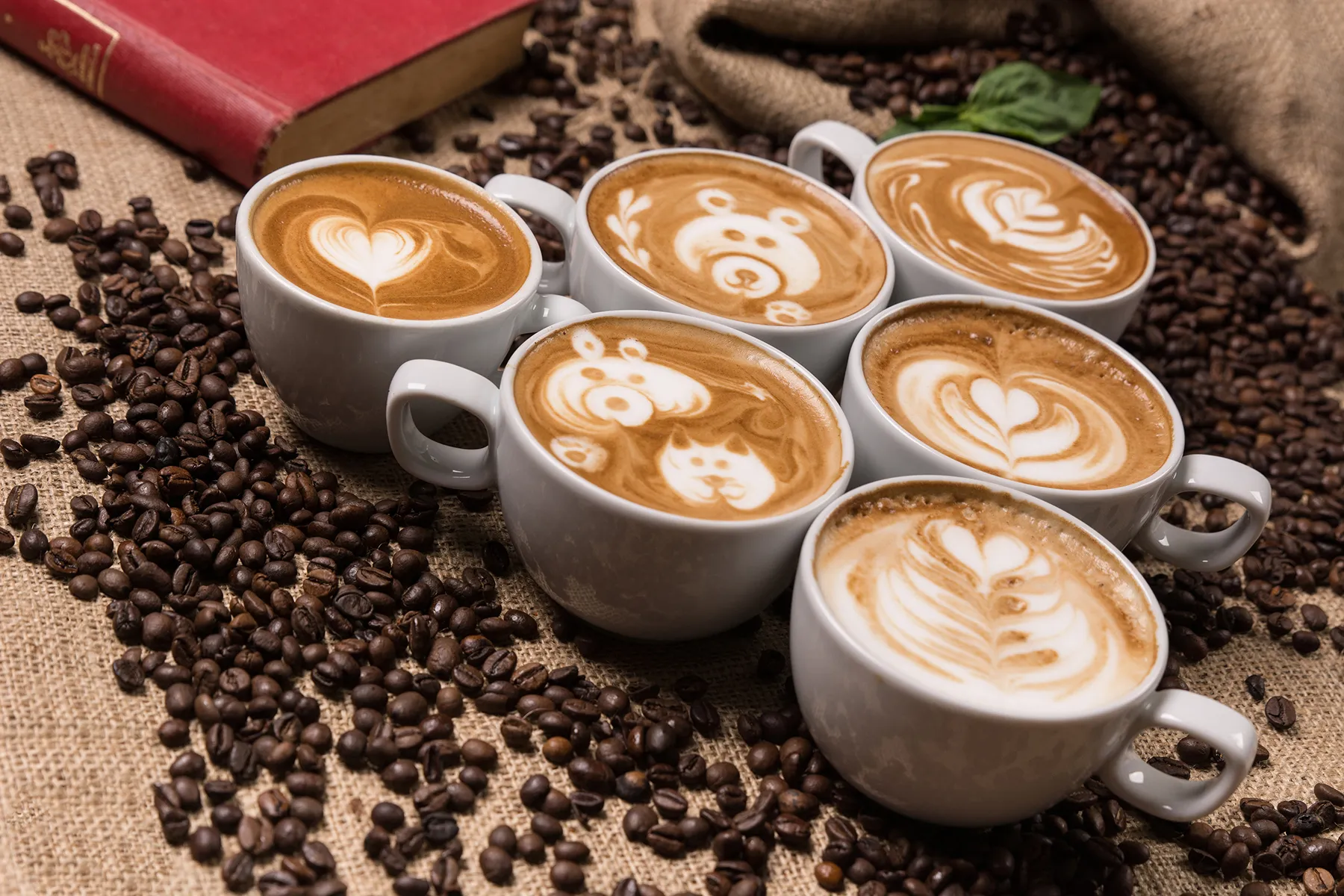
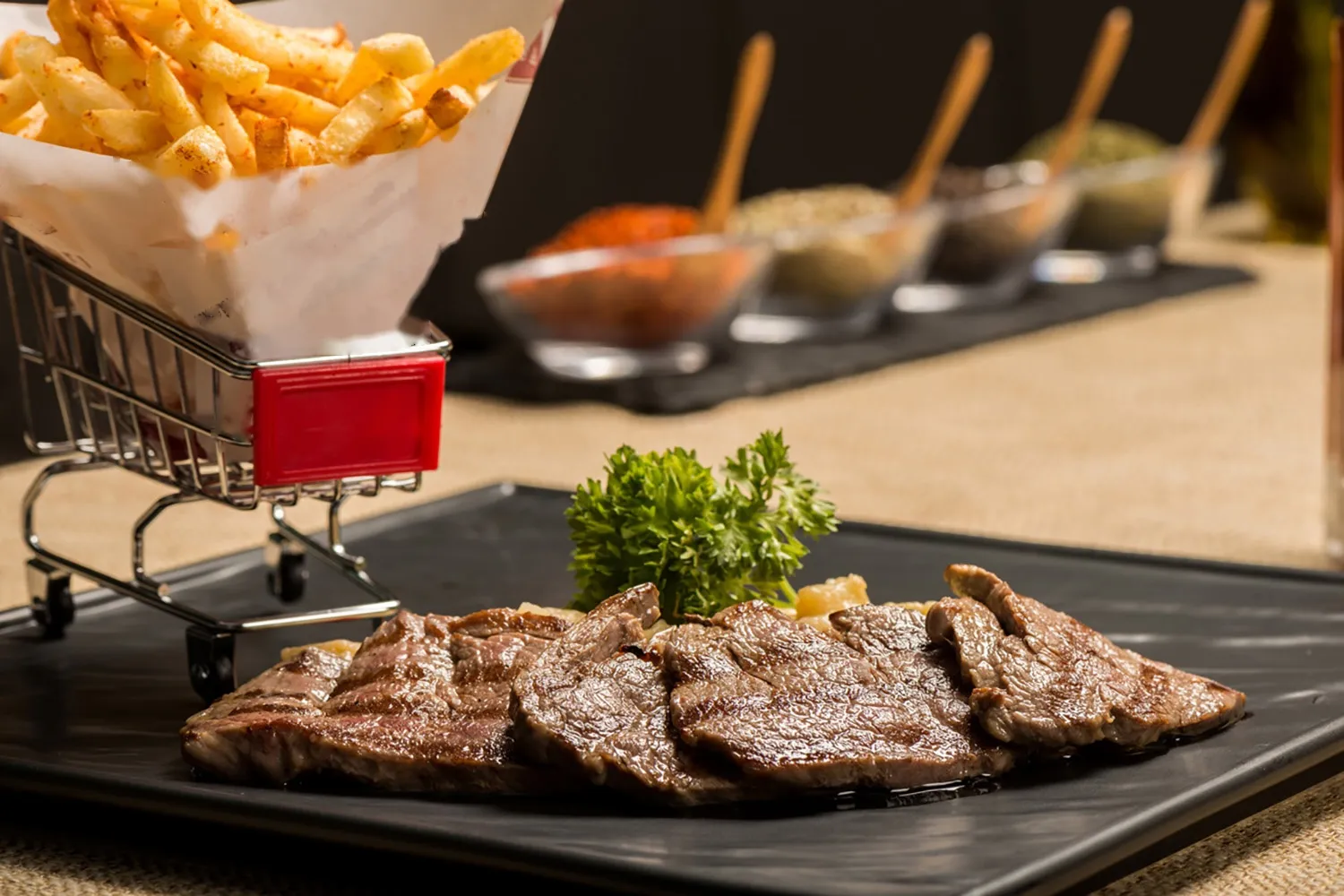
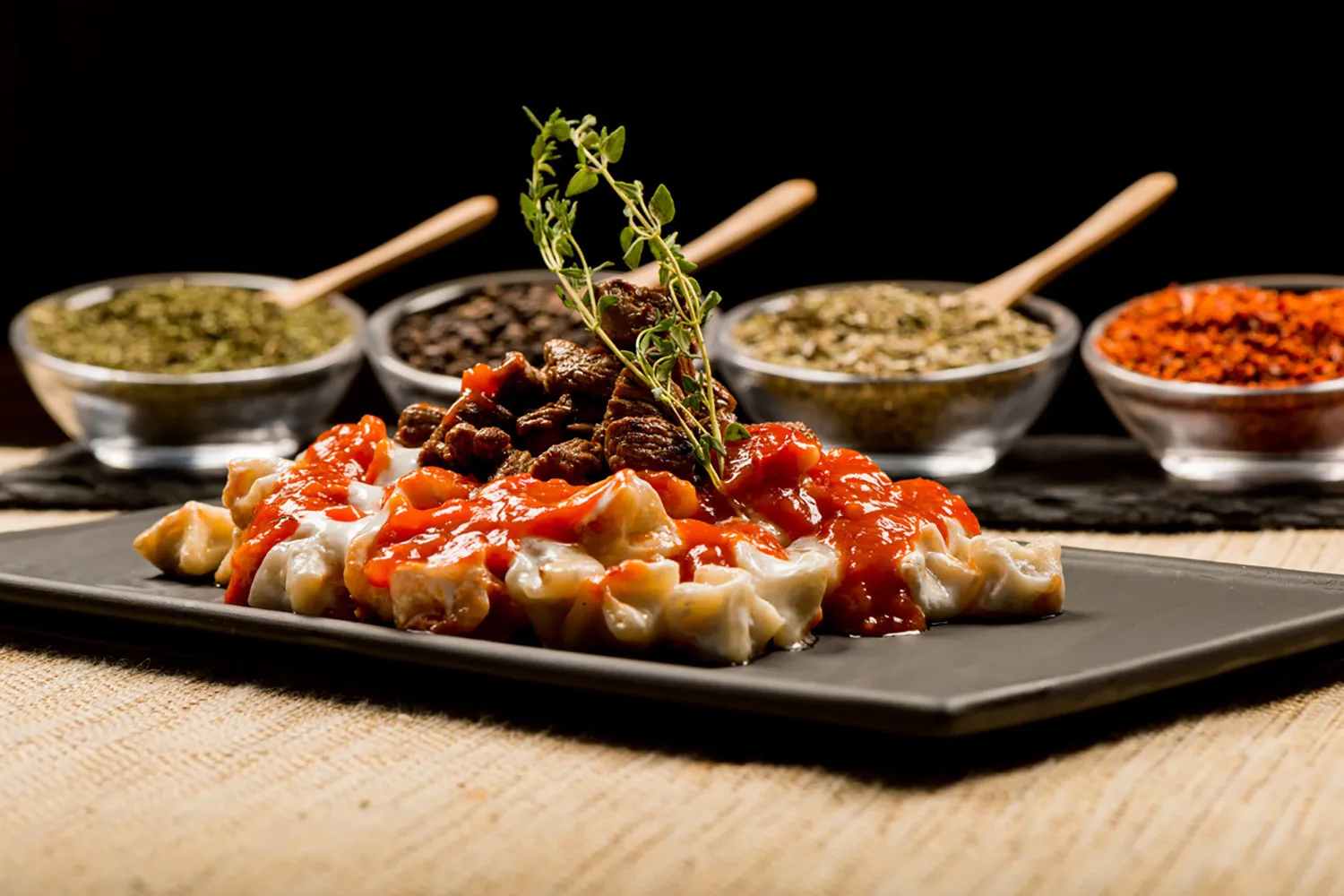
See more: Our food photography work
Images for menus and online ordering
The same dish needs a different frame on every channel. At restaurants and cafés in Istanbul, we plan all of these angles together in a single shoot day; the menu, the ordering platforms and social media all draw on the same series.
Printed and QR menus
On a menu, customers want to recognize the dish. A 45° angle that shows the whole plate is the most readable frame for most dishes: height, layers and portion size are visible together. On a QR menu, the image opens small on a phone, so the plate fills the frame and the background stays simple.
Food ordering platforms
On platforms such as Yemeksepeti, Getir and Trendyol Yemek, the image opens in a small box inside a list, and customers compare several plates side by side. In that box, a square shot from above with the plate centered is the safe choice; flat dishes such as pizza, bowls and trays read best from this angle. We couldn’t find a public, official source for these platforms’ size rules, so we don’t give numbers here; we prepare the files to the current requirements the business sees in its own panel.
Google Business Profile
When someone searches for a restaurant on the map, the first images they see are in the business profile. According to Google’s guidelines, photos should be JPG or PNG, between 10 KB and 5 MB; the recommended resolution is 720×720 pixels, with a minimum of 250×250. Photos should be in focus and well lit, without significant alterations or excessive filters. A few frames of the dining room and the exterior alongside the food shots keep the profile from looking like nothing but plates.
Social media
The feed needs square or vertical frames; Stories and Reels need a full-height vertical frame. When a vertical frame is cropped from a horizontal shot, the edges of the plate get cut off, so the vertical frame is set up separately during the shoot.
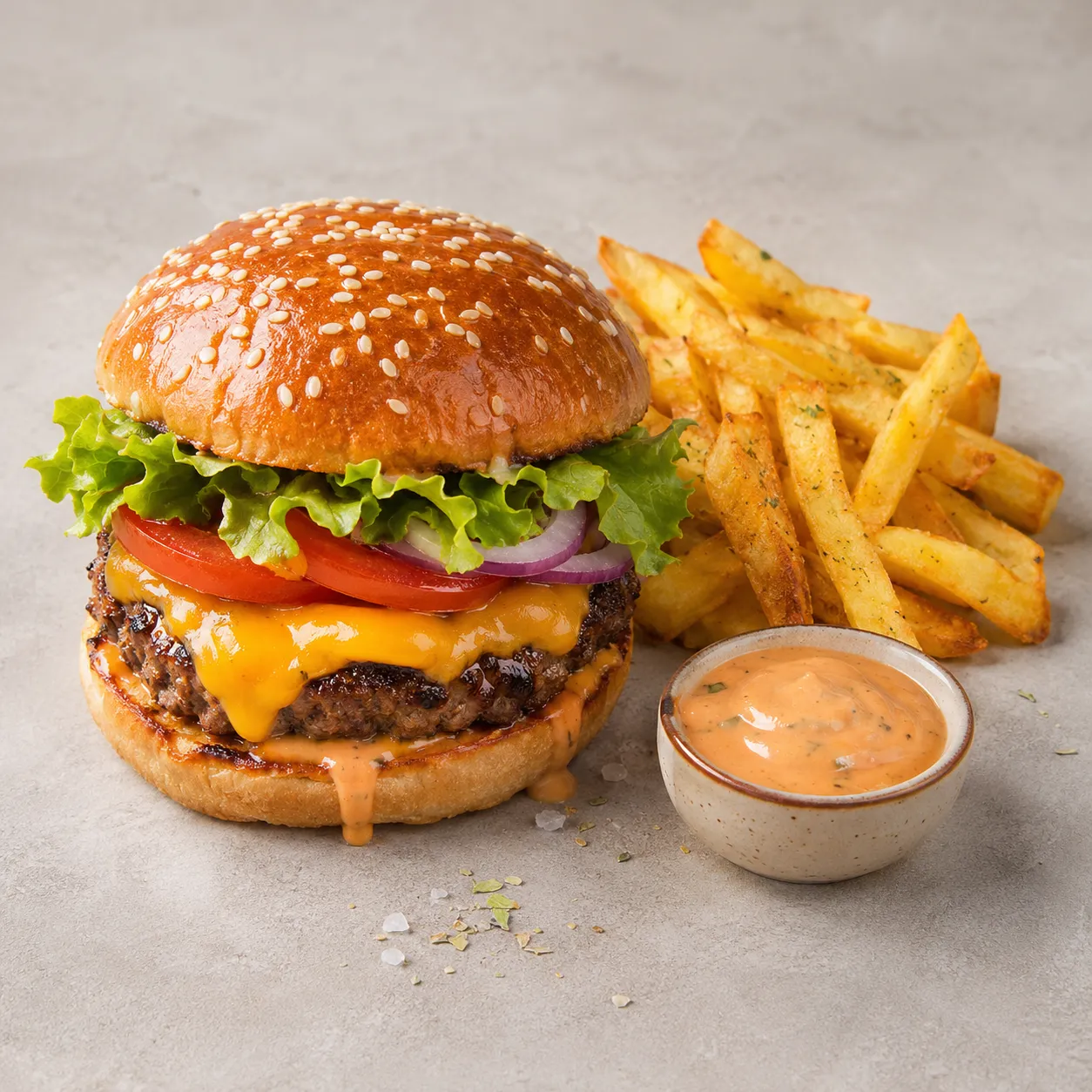
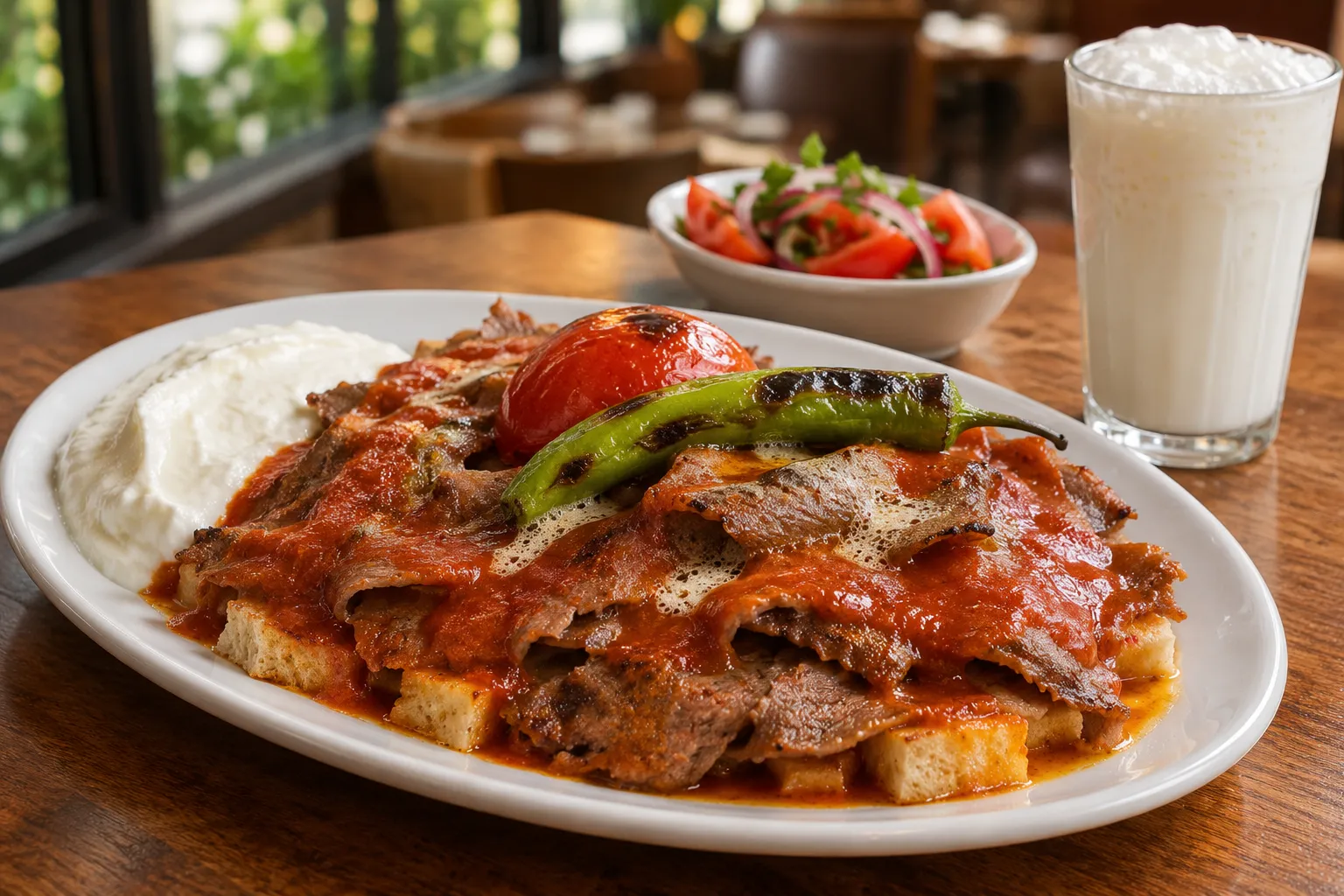
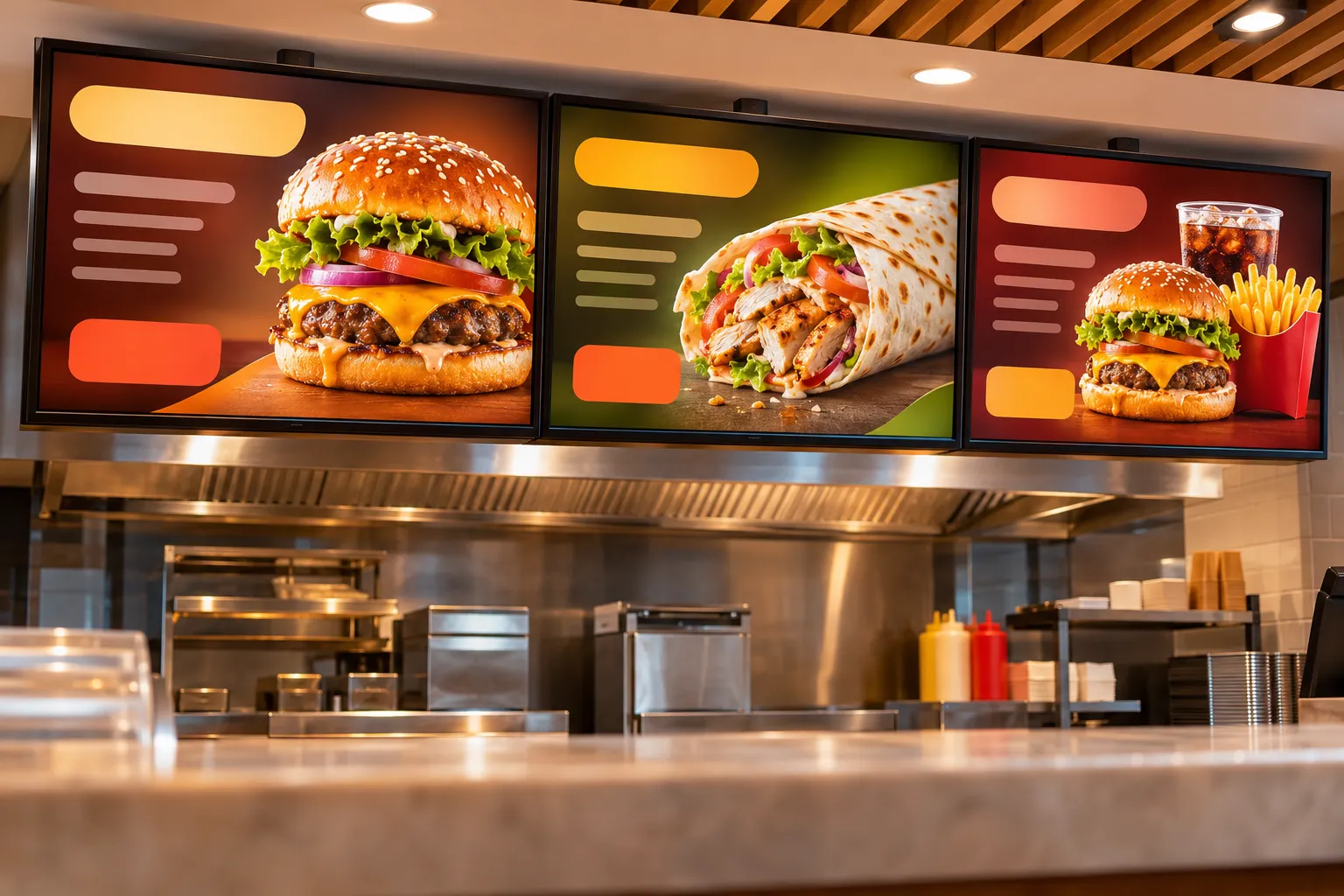
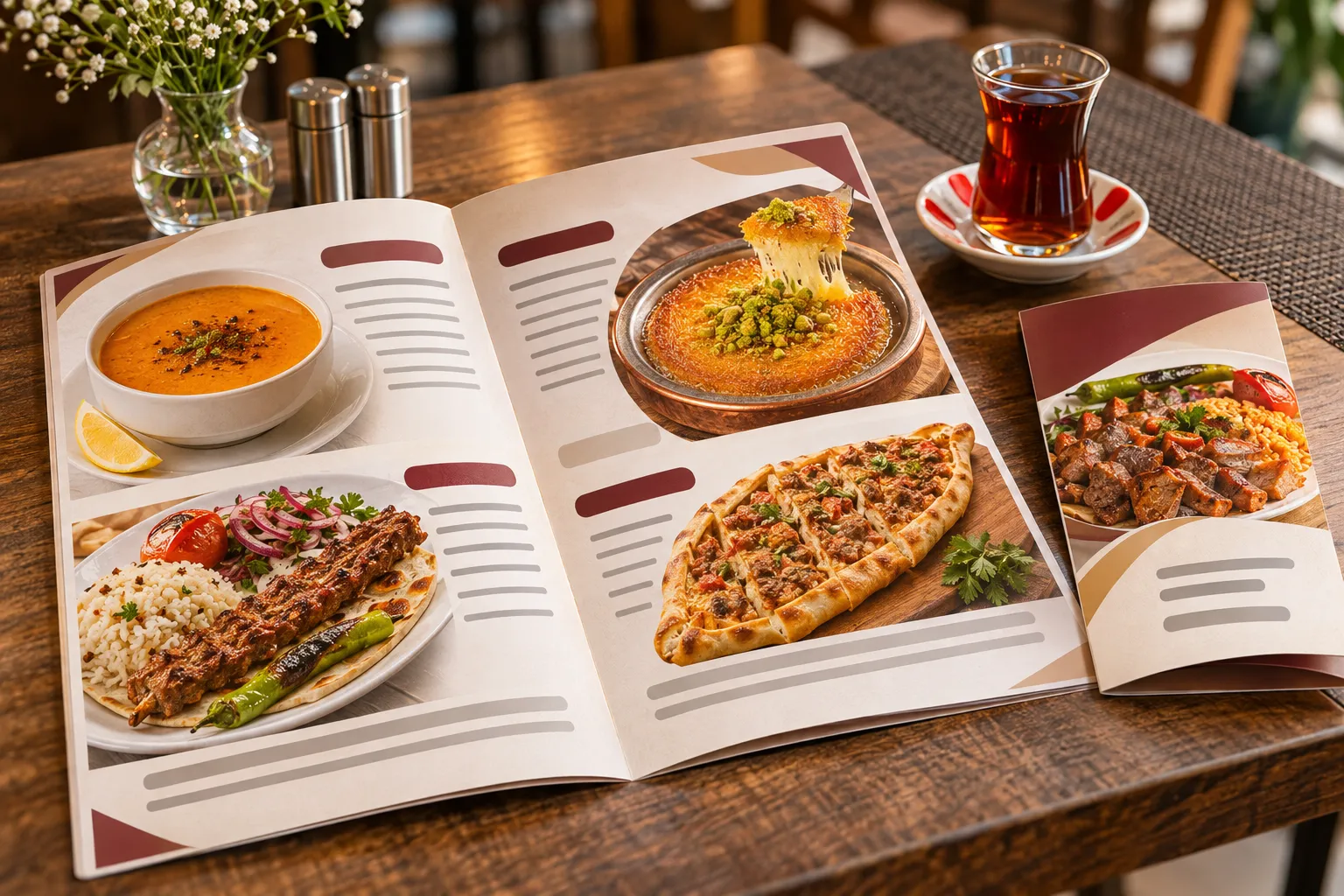
Created with the support of AI technologies. Usage examples.
On-location or studio shoot?
The product decides which one is right; most brands use both.
| On location (restaurant / café) | In the studio | |
|---|---|---|
| Best suited for | Dishes served hot; menu and ordering-platform images | Packaged products; shelf, e-commerce and marketplace images |
| Who prepares the food | The business’s own kitchen, just as it’s served | Presentation is planned together with the brand |
| Lighting | Built around the venue’s own light | Controlled studio lighting |
| Timing | Outside service hours, planned in a single day | Based on the studio schedule |
Where does AI fit in food photography?
Let’s answer this one openly.
Food is one of the areas where AI struggles most. The rise of steam, the flow of a sauce, the pores of bread — these are random and different in every frame. AI can generate them, but what it generates isn’t your food.
This has a practical consequence: a customer whose plate doesn’t match what they saw on the menu doesn’t order again. With packaged products, the same gap comes back as returns.
Our approach: the food is a real shoot. AI is useful for editing the background, enriching the scene and producing variants — not for the plate itself.
What determines the price?
Three variables set the price of a food shoot: the number of dishes, where the shoot takes place (on location or in the studio) and the number of channels the images will be used on — menu, social media, ordering platforms, packaging. A one-day menu shoot and a steady monthly content flow aren’t priced on the same basis. We define the scope together and give you a written quote before we start.
Frequently asked questions
Does the shoot take place at the restaurant, and how long does it take?
Yes, most food shoots take place at the restaurant itself: a dish shot the moment it leaves the kitchen has its steam, sauce and texture at their freshest. The shoot is scheduled outside service hours. Its length depends on the number of plates, the set-up and the light in the venue; the exact plan is set in the discovery meeting.
How many dishes can you shoot?
It depends on how long each dish takes to prepare and on the set-up. A large part of the menu can often be completed in a single shoot day, scheduled outside service hours; the exact number is settled at the brief stage.
Who prepares the food, and do we need a food stylist?
The restaurant’s chef and kitchen prepare the plates just as they’re served; the chef decides the presentation anyway. So the plate in the photo is the plate the customer gets. Restaurant shoots usually don’t need a separate food stylist; we handle small visual touches with the chef. For packaged products and campaigns, we discuss a stylist at the brief stage.
Do you create food images with AI?
We don’t generate the dish itself. AI is used for background editing, enriching the scene and producing variants; the food itself is always a real shoot. The image on the menu and the plate that is served have to be the same.
Are the images delivered ready for ordering platforms and social media?
Yes. The same shoot produces a separate format for each channel: landscape and square for digital ordering platforms and menus, vertical frames for Stories and Reels. Which channels you need is settled at the discovery stage; the delivered files can be uploaded without further editing.
When the menu changes, do we have to redo the whole shoot?
No. Only new dishes, or dishes whose presentation has changed, are shot; because the light and set style of the earlier shoot are kept, the new frames sit in the same series as your existing images. That’s why we set up seasonal plans with businesses whose menus change with the seasons.
Let’s show your menu the way it should look.
On location or in the studio — your food, exactly as it is.
- Our on-location shoot service: On-Location Social Media Video
- Our production approach: Our Production Principles
Created with the support of AI technologies. The images in the gallery are from real shoots.