Where Does AI Fit in a 360° Virtual Tour?
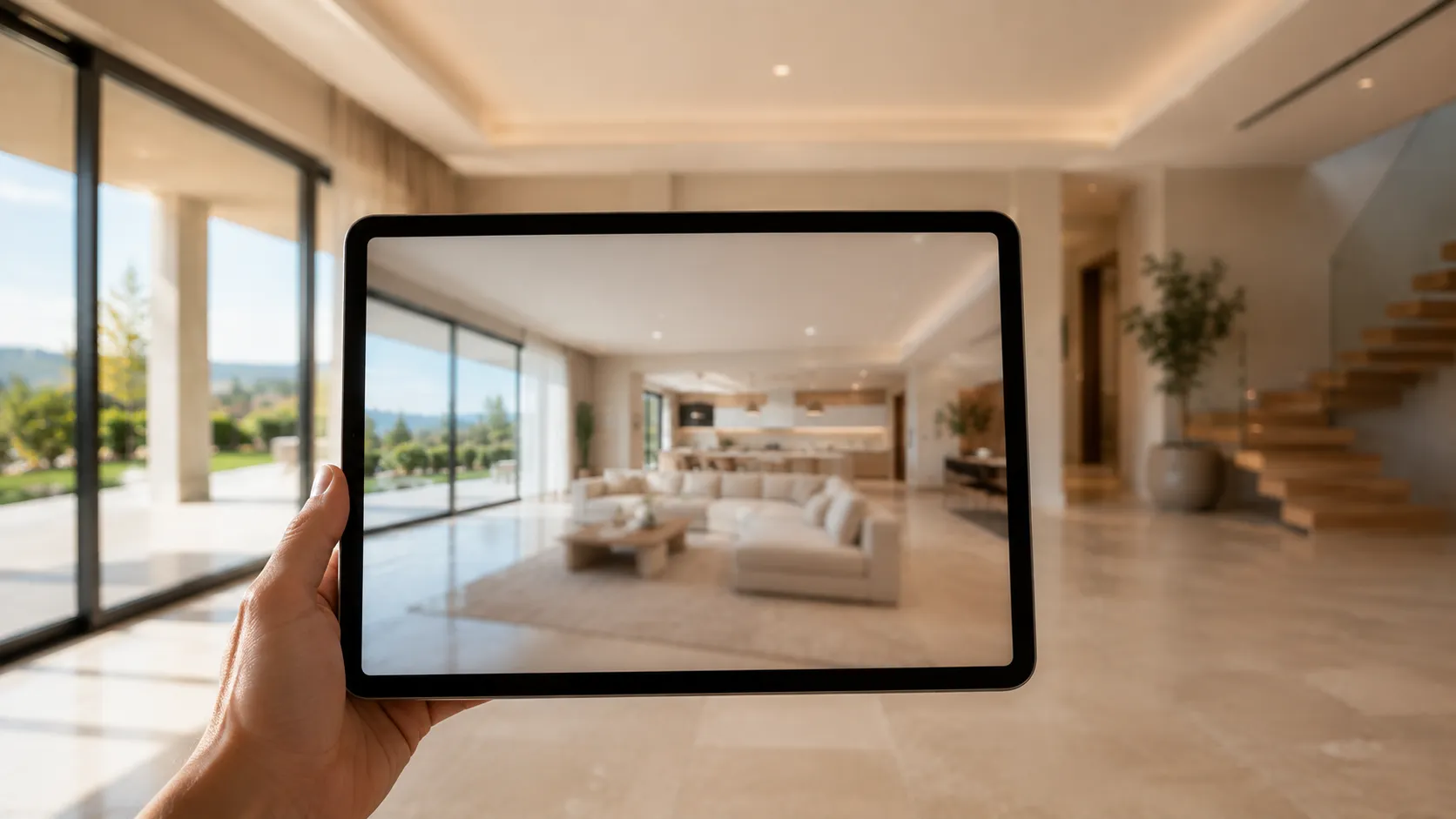
Created with the support of AI technologies.
A 360° virtual tour is a record of a real space, so AI can't create one: if AI invents the space, the result is a representative visualization, not a tour. Software and AI speed up the work around the shoot, such as stitching panoramas, balancing exposure, removing tripods and covering faces and plates, always on top of the existing capture.
AI has sped up every part of image production, but the 360° virtual tour has stayed outside that wave. The reason is simple: a virtual tour isn’t an image, it’s a record. The visitor walks through a space that really exists.
Why can’t a virtual tour be generated?
A virtual tour is made by recording the space in panoramic photographs and linking those scenes together. When the visitor moves from the living room to the hallway, what they see really is that hallway.
When AI invents the space, what comes out isn’t a tour, it’s a representative visualization. In real estate this distinction is critical: trusting that the space they saw really exists, the buyer plans a trip and makes an offer.
What software and AI do
- Panorama stitching
- Exposure balancing
- Tripod and reflection cleanup
- Face and license plate masking
- Scene ordering
What AI doesn't do
- Generate the space itself
- Add a room that doesn't exist
- Change dimensions and proportions
- Present a representation in place of the real thing
So where does AI help?
It doesn’t produce the tour itself, but it speeds up most of the production process. Some of the steps below are done with conventional image-processing software, some with AI models; which is used depends on the software:
- Panorama stitching and alignment: joining many frames seamlessly.
- Exposure balancing: balancing a bright window and a dark interior in the same scene.
- Cleanup: removing the tripod, the crew or reflections from the image.
- Privacy: covering faces and license plates left in the frame with a mosaic or a solid mask.
- Ordering and labeling: linking dozens of scenes in the right order and naming the rooms.
What they all have in common is that they work on top of the existing capture; they don’t change the space.
Is there anywhere to hide in a 360° frame?
In an ordinary photo you can narrow the frame and leave out what you don’t want. In a panorama that isn’t possible: every direction ends up in the image. That turns a virtual tour shoot into a disciplined job. The space is prepared in advance, people leave the area during the shoot, and the faces and license plates that remain are covered afterwards. For single-frame photos, you can do this last step yourself: the Face and License Plate Blur tool finds faces in your browser and covers them with a mosaic, and the file never leaves your device.
The same discipline applies to aerial shooting; we covered that side in detail in our article on drone privacy and KVKK, Türkiye’s personal data protection law.
Should you use a virtual tour or a 3D render?
The two answer different questions:
- An existing property: the buyer wants to see the real thing; a virtual tour is the right tool.
- A project under construction: there is no space yet; a 3D render is the right tool.
In real estate, blurring this distinction can cost you trust.
Frequently Asked Questions
Can a virtual tour be produced with AI?
No. A virtual tour is created by recording a real space in panoramic photographs; the visitor walks through a space that really exists. If AI invents the space, what comes out isn’t a tour, it’s a representative visualization. AI’s job isn’t to produce the tour but to speed up the work before and after it.
Where does AI help in a virtual tour?
In tasks such as panorama stitching and alignment, exposure balancing, removing the tripod or crew from the image, covering faces and license plates, and ordering and labeling scenes. Some of these steps use conventional image-processing software, others AI models; all of them work on top of the existing capture and leave the space unchanged.
What is the difference between a virtual tour and a 3D render?
A virtual tour records an existing space; a render models a space that doesn’t exist yet or has been altered. With a property for sale or rent, the buyer wants to see the real thing, so a tour is the right tool for an existing space and a render for a building still at the project stage.
How long does a virtual tour shoot take?
It depends on the size of the space and the number of scenes. An apartment is recorded with a few scenes, a large facility or campus with dozens. The shoot usually takes a few hours on site; the real time goes into stitching, setting up the link points and preparing for publication.
How is privacy protected in a tour?
Because a panoramic shot records 360 degrees, nothing is out of frame; every direction ends up in the image. So the space is prepared before the shoot, people leave the area during the shoot, and the faces and license plates left in the image are covered with a mosaic or a solid mask afterwards.
A real space, ready to walk through
You can walk through the tours we produce for homes, production facilities, corporate buildings and trade fair stands on our 360° virtual tours page. For all of our real estate content production, take a look at our real estate services.