Why AI Alone Is Not Enough
Created with the support of AI technologies.
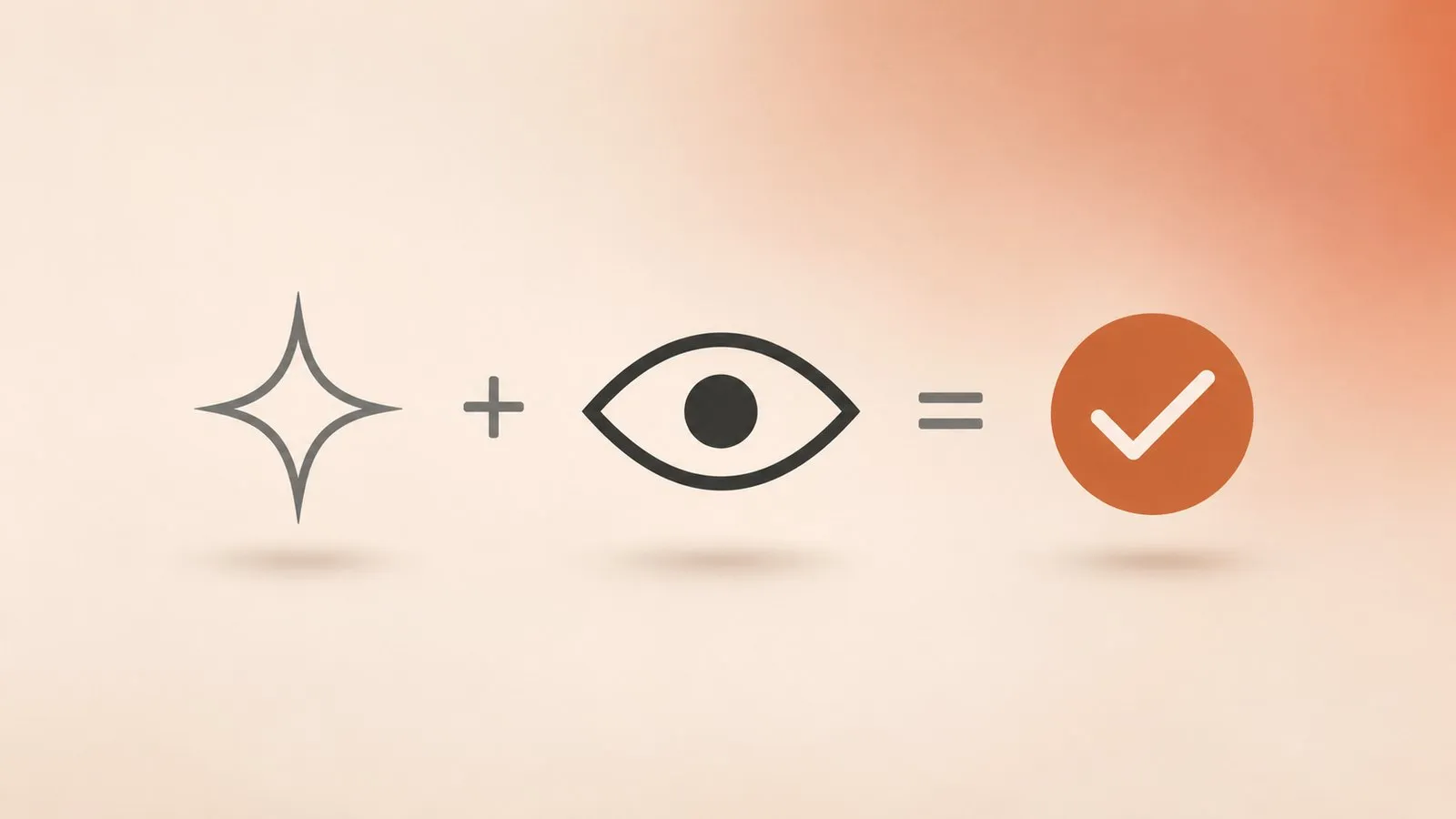
AI has made image generation available to everyone, but it has not made it easier to produce images that sell. The difference is not in the model but in the decisions that steer it: product knowledge, composition, platform fit and accuracy. AI provides speed and scale; what produces the image that sells is an experienced eye running the tool.
AI has democratized image production. Anyone can now generate an image in a few clicks. But a critical question follows: does every image you generate sell?
A tool being accessible does not make it easy to use well. Everyone had Photoshop; that did not make everyone a retoucher. Everyone has a camera on their phone; that did not make everyone a product photographer. The same rule applies to AI: the tool is shared, the result is not.
The tool is everywhere, so why isn’t the result?
A successful e-commerce image is not “a nice picture.” It is a set of decisions that describe the product accurately, on the right platform, with the right composition and the right light, and that make the buying decision easier. The model makes none of those decisions for you; it only produces what you ask for. If you don’t know what you want, you produce the wrong thing, quickly.
The four decisions that make an image “sell”
The conclusion we draw from our own production experience is this: the difference is not in the model but in the decisions. Behind every image that sells are these four decisions:
- Product knowledge. Knowing how the fabric drapes, which angle makes it look bad, what should stand out. You can’t learn that without handling the product.
- Composition and light. A setup that directs the eye to the product and lets you feel the texture. AI produces “beautiful”; it doesn’t produce “right.”
- Platform fit. An image can be right for a cover on Trendyol, one of Türkiye’s largest online marketplaces, and wrong for Instagram. The target has to be clear from the start.
- Accuracy. If color and cut are not true to the real product, fast production comes back as returns. The second half of accuracy is knowing the source: whether a frame was generated with AI is told by the file, not by the eye.
How does IDIFO use AI?
At IDIFO, we don’t use AI on its own. We combine more than 15 years of product photography experience with new-generation production technologies. AI gives scale and speed; we add direction, accuracy and brand consistency. The goal is not just to produce images but to make the product ready to sell. You can see how this approach works in practice on our e-commerce product photography page.
What it means when a tool shuts down: Sora Is Shut Down
Looking at it in numbers: AI Retouching Is 22× Faster and 42% Lower in Quality: Who Measured That?
How the decision is made on the 3D side: CGI or Product Photography? That’s the Wrong Question
The tool is the same for everyone. What makes the difference is that it is used by an eye that knows what will sell.
Customers don’t buy tools. They buy results.
Frequently Asked Questions
Do AI-generated images work for selling?
Yes, when they are managed well. But AI produces a “beautiful” image, not automatically one that “sells.” Without product knowledge, the right composition and platform fit, fast production just means a fast wrong result. And if color and cut are not true to the real product, that speed comes back as returns.
Which is better, AI or a real shoot?
They are not rivals; they complement each other. A real shoot gives fidelity to the product and control; AI adds speed and scale. The best result comes when an experienced eye uses the two together, depending on the job. The model makes none of the decisions for you; it only produces what you ask for.
Why work with a studio instead of using a tool myself?
Everyone has the same tool; what makes the difference is who runs it. A studio knows which tool, with which settings, gives a result that sells on which job, and checks every frame. You deal with the outcome, not with trial and error.