What Is A+ Content? The Second Half of Your Product Page
Last reviewed:
What changed
AI disclosure used to be made only through checkboxes on the A+ upload screen. Since July 2026, Amazon looks for the disclosure in the file itself for images containing photorealistic, fully AI-generated people: the keyword contains-synthetic-performer must be added to the XMP dc:subject metadata field. Images with no people, images showing real people and non-photorealistic images are out of scope.
A+ content is a rich promotional area of image and text blocks below the standard sections of a product page: "A+ Content" on Amazon, a rich product description on Trendyol and other marketplaces. It can include wide banners, detail blocks, comparison tables and size charts. Amazon requires a registered trademark; on Trendyol, access varies by seller level.
On a product page, the images end, the price and size selector follow, and then you scroll down.
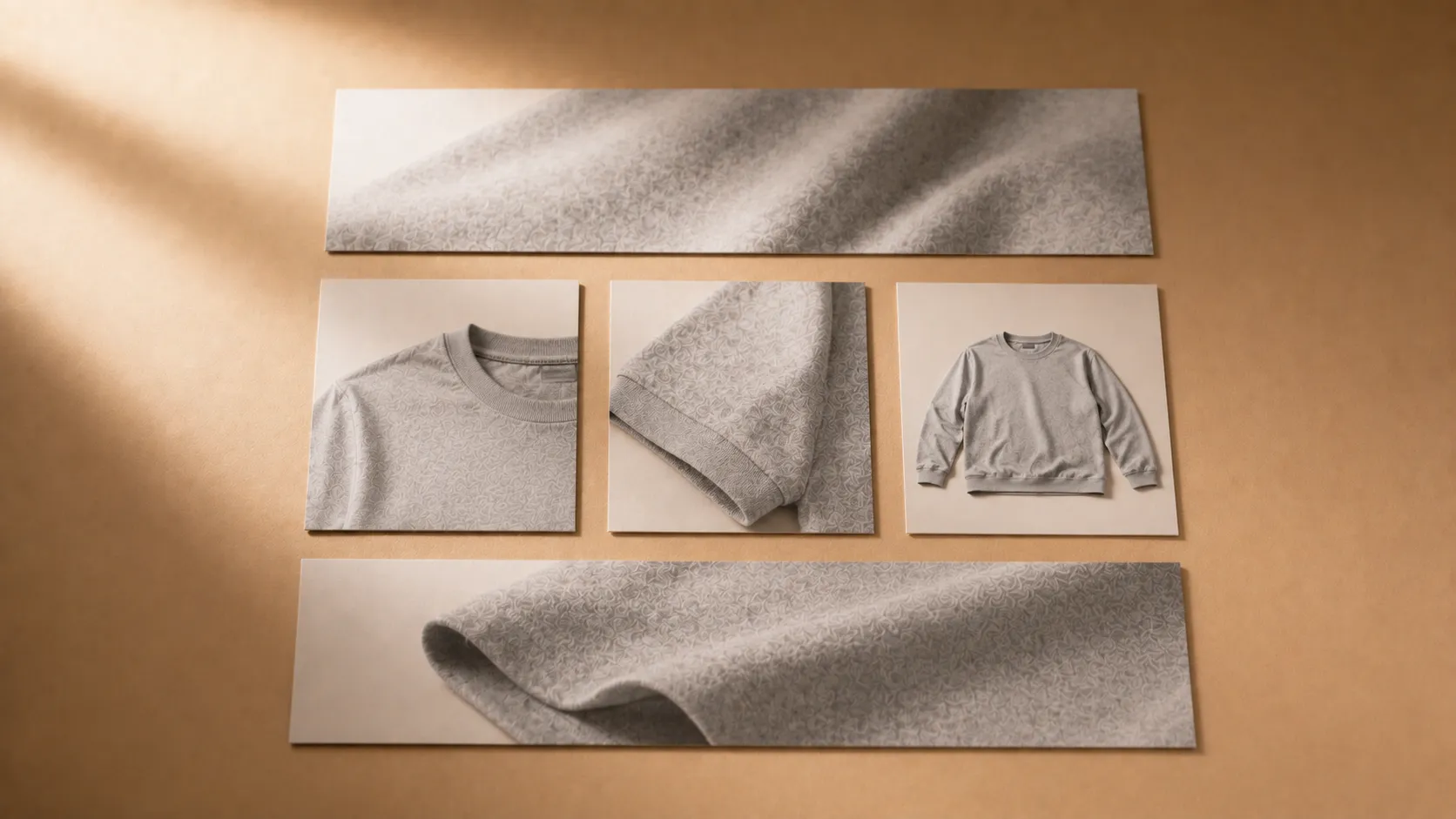
On most pages, what’s there is four bullet points and three sentences. On some pages it’s something else entirely: full-width images, a close-up of the fabric, a size chart, a comparison with similar models.
The second kind is A+ content.
What does it include?
The block structure varies by platform, but a typical A+ section contains the following:
Brand banner. A full-width image at the top and a one-line brand statement. It tells who makes the product, not what the product is.
Detail blocks. Usually a three-up grid: fabric texture, stitching quality, a collar or cuff detail. One sentence under each image.
Comparison table. It sets different models from the same brand side by side, with rows such as fit, material and season of use.
Size and care. Size chart, washing instructions, material composition. Presented visually, they’re far more readable than plain text.
Usage scenario. A wide-banner image that shows where and how the product is used.
What is it for?
One thing: reducing the hesitation a customer feels about a product they can’t touch.
In a physical store the customer touches the fabric, sees the fit, feels the weight. Online, none of that exists. All that’s left is images and text.
The cost of that hesitation comes back as returns. In Trendyol’s own return reasons document, the same warning appears under both “Disliked Product Quality” and “Disliked Product Model”: the customer expects the product that reaches them to be the same as what they saw in the image.
A+ content helps set that expectation correctly from the start.
Standard product page
- 5–8 product images
- Bullet list
- Short plain-text description
The customer's question goes unanswered.
Page with A+ content
- Wide-banner images
- Detail blocks and tables
- Size, care, comparison
Hesitation is resolved on the page, not through a return.
The customer can't touch the product — all that's left is images and text.
Who can use it?
There’s a threshold here, and most brands don’t know about it.
On Amazon, A+ Content requires a registered trademark. Sellers not enrolled in Brand Registry can’t access this area. So if you’re a third-party seller, distributor or reseller, you can’t add A+ on your own — the brand owner has to add it.
On Trendyol, access to the rich product description area varies by seller level and category. Because the rules are updated from time to time, you need to check your seller panel.
It matters because you should confirm you have access before you commission the content.
Do you need a new shoot?
Usually not — and that’s the most practical thing about it.
Most A+ blocks can be produced from the product images you already have. The fabric detail is cropped from a frame that has already been shot, the stitching view comes from a close-up, and the comparison table is built from data.
A new shoot is only needed if you have no image of that detail at all. A brand’s entire ten-product A+ set can come out of the existing archive.
That makes A+ content one of the lowest-cost improvements: no new production, just a rearrangement of existing material.
What should you watch out for?
Image rules apply here too. A+ blocks aren’t subject to rules as strict as those for the main image, but platform standards still apply. Images containing text are accepted in the Amazon A+ area — they aren’t on the main image.
AI disclosure. On Amazon, A+ assets containing photorealistic AI-generated human figures require a disclosure; the upload screen has checkboxes for this. Since July 2026, the disclosure doesn’t stop at the checkbox: for A+ images containing photorealistic, fully AI-generated people, the keyword contains-synthetic-performer must be added to the file’s XMP dc:subject metadata field. The scope is narrow: images with no people, shots of real people (even if retouched with AI), non-photorealistic illustrations, and fictional characters from films, series or games are outside this requirement. The details and background of the label are in the Amazon image requirements guide.
The risk of exaggeration. Because the A+ area is wide, the temptation to make the product look better than it is grows. But the outcome is the same: the customer opens the box, sees the difference, and the product comes back.
Frequently Asked Questions
Does A+ content increase sales?
There’s no direct guarantee. What A+ content does is answer the customer’s questions about the product on the page itself. That makes the purchase decision easier and reduces returns caused by the gap between what the customer expected and what arrived. The effect varies by product and category.
I don’t have a registered trademark. Can I add A+ content?
Not on Amazon: A+ Content requires a registered trademark, and sellers not enrolled in Brand Registry can’t access it, so a distributor or reseller needs the brand owner to add it. On Trendyol and other marketplaces, access to the rich description area follows different rules, so check your seller panel.
Do I need a separate shoot for A+ content?
In most cases, no. A+ blocks can be produced from your existing product images through detail crops and block design: the fabric detail is cropped from a frame already shot, and the comparison table is built from data. A new shoot is only needed if you have no image of that detail at all.
Should I prepare A+ content for every product?
No. It makes more sense to start with your best sellers and with products that have high return rates, since A+ content works by setting the customer’s expectation correctly before the box is opened. For low-volume products, the effort of preparing the blocks may not pay off.
Let’s prepare the second half of your product page too.
A+ blocks, comparison tables and size charts from your existing images. See our A+ content service.
Marketplace image rules: Amazon · Trendyol
Where to look when sales drop: Sales Dropped: Where Should You Look First?
Sources (5)
- Amazon Seller Central — Product image guide — sellercentral.amazon.com
- Trendyol Akademi — Return Reasons (in Turkish) (accessed November 27, 2026) — akademi.trendyol.com
- Amazon — A+ Content (official seller page) — sell.amazon.com
- Amazon Seller Forums — What new rules about AI-generated product images should sellers pay attention to in 2026? (the "AI-generated" and "AI-generated people" checkboxes on A+ upload) — sellercentral.amazon.com
- eWeek — Amazon Requires Sellers to Disclose AI-Generated People in Product Images (the contains-synthetic-performer keyword and A+ content scope) — eweek.com