From Image to Sale: Why Your Brand's Content Production Should Be a System
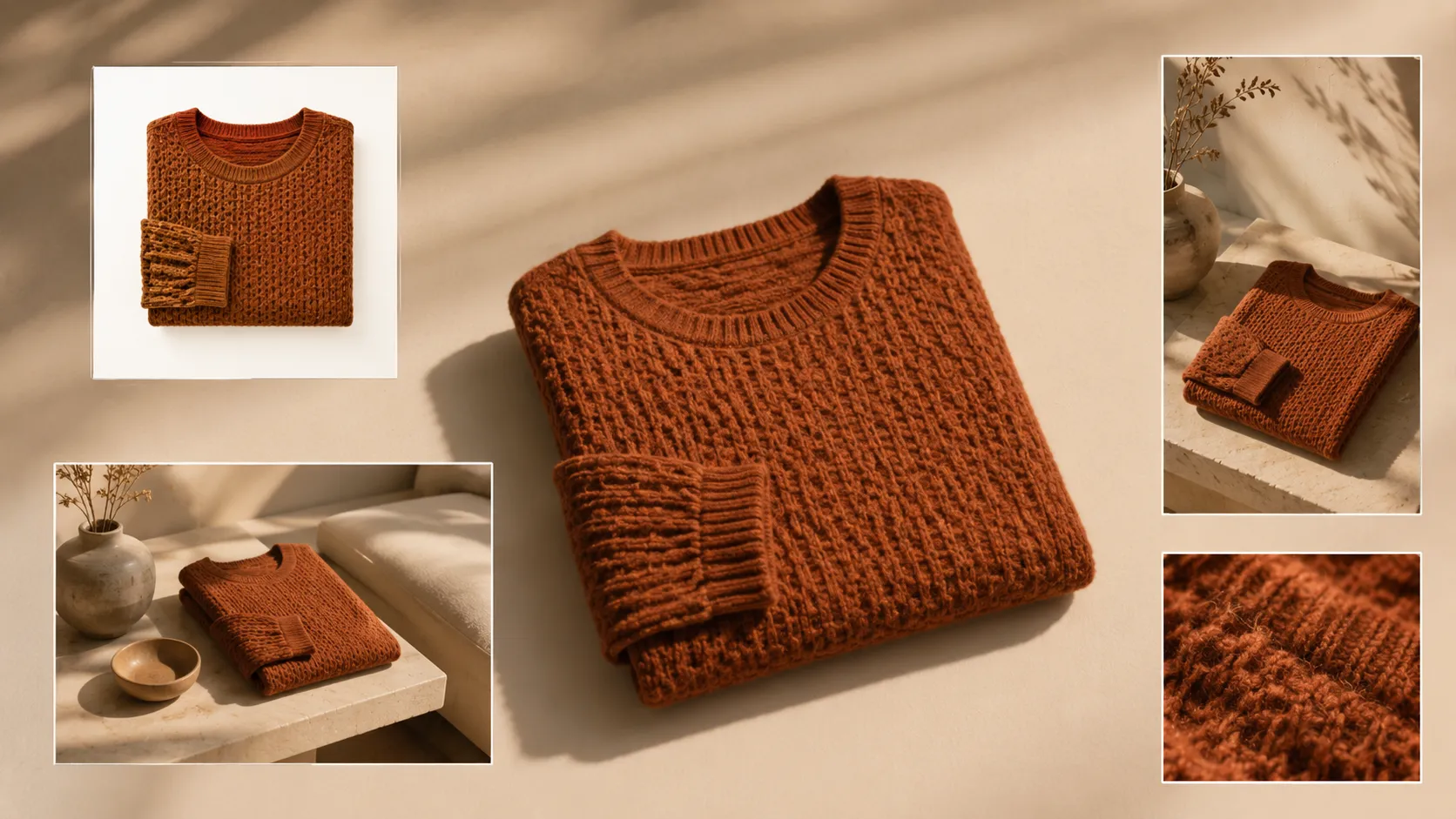
Most brands produce visuals piecemeal: photos from one vendor, video from another, marketplace images from a third. The result is a scattered brand image and repeated cost. When production runs as one system, a single shoot yields photos, video, marketplace images and social content together, so output is consistent and often costs less.
For a product to sell, it first has to be seen. But “being seen” doesn’t mean one image: a white-background frame for the marketplace, a vertical video for social media, a lifestyle scene for ads, a detail shot for the store page. The same product has to appear in different forms in different places.
This is exactly where most brands get stuck.
Why does piecemeal production get expensive?
Say you had a photographer shoot your product. Then you needed video for social media, so you went somewhere else. The marketplace images didn’t meet the rules, so you had a third vendor fix them. Then you needed a lifestyle scene for ads, so you went to a fourth.
Four separate productions, four separate briefs, four separate payments. And worst of all: four separate visual languages. Your product looks one way on Instagram, another on Trendyol and completely different in ads. The customer doesn’t see the same brand; they see pieces that don’t match.
This isn’t a budget problem; it’s a system problem.
How many outputs can come from one shoot?
When production is planned properly, a single shoot day yields all of this together: white-background frames for the marketplace, detail images from different angles, vertical videos for social media, lifestyle scenes for ads and campaign images for the store page.
The difference is this: these aren’t pieces “collected” later but outputs planned together from the start. The same light, the same color calibration, the same brand language. The product looks like the same product everywhere.
How does the path from image to sale work?
There are four stages, and each rests on the one before it:
Create. Raw shots that are true to the product and technically correct. Every mistake skipped at this stage carries into the next three: a frame shot under the wrong light can’t be fixed afterwards, because the right data was never recorded.
Launch. Every channel has its own rules: the marketplace’s size and background standards, social media’s formats, the ad platforms’ technical requirements. This is the stage where the right variants are pulled from the same shoot.
Grow. The work doesn’t end once the image is published. Which image gets clicked, which one brings returns, which frame drives conversion: production is readjusted based on this data. When this data has to be read alongside sales, stock and integrations, E-commerce Performance Analysis comes in.
Sell. The final measure is sales. But the quietest obstacle in front of a sale is often the image itself: because the customer can’t touch the product, they decide by looking at the image alone, and they compare what they see with what arrives.
What is the real cost of a wrong image?
A home textile brand had its images generated entirely by AI. “No need to pay for a studio,” they said. Production got faster and costs dropped, but returns shot up.
The reason was simple: in the images, the fabric’s texture and color came out different from the real thing. Customers ordered the product they saw on screen and found something else when they opened the box.
The fix was just as simple: we photographed the product for real and left the background and scene to AI. The product stayed real down to the pixel, and production stayed fast. The return rate went down.
The lesson here: the cost of an image isn’t the shoot fee. The cost of an image is the returns, negative reviews and lost trust that a wrong image brings.
What does single-source production change?
Three concrete differences.
Consistency. The same product looks the same on every channel. The brand language doesn’t fragment.
Cost. Getting multiple outputs from one shoot usually costs less than having the same work done again in four different places: the brief, the preparation and the shoot happen once.
Accountability. When something goes wrong, there is one point of contact. You don’t end up in a “the photographer said this, the video team did that” situation.
Frequently Asked Questions
I’m a small brand. Is this system for me?
The system is about approach, not product count. The same logic holds for a 20-product collection: getting multiple outputs from one shoot is usually cheaper and more consistent than piecemeal production, because the brief, the preparation and the shoot happen only once.
Do you use AI?
Yes, but not to change the product. The product itself is a real shoot; AI adds speed in generating scenes, backgrounds and variants. Interventions that change the product’s color, texture or form are avoided because they lead to returns and complaints.
I already have images. Do I need to start from scratch?
No. Depending on the state of your existing archive, some images can be used after correction, and new production is done only for the channels that are still missing. So the work starts with reviewing what you already have, not with a new shoot.
How long does the process take?
It varies with the number of products and the range of outputs you want. What decides it isn’t the number of shoot days but how many variants are needed for how many channels; once that is clear, the calendar becomes clear too.
Send us your product, and the system handles the rest.
Photos, video, marketplace images and social content, all from the same shoot, in the same brand language. See our e-commerce visual production service.
If you’d like to look at the work we’ve produced, our portfolio is here.
AI agents now evaluate your product too: Your Product Page Now Sells to Two Customers: One Looks, One Reads
Where to look when sales drop: Sales Dropped: Where Should You Look First?